
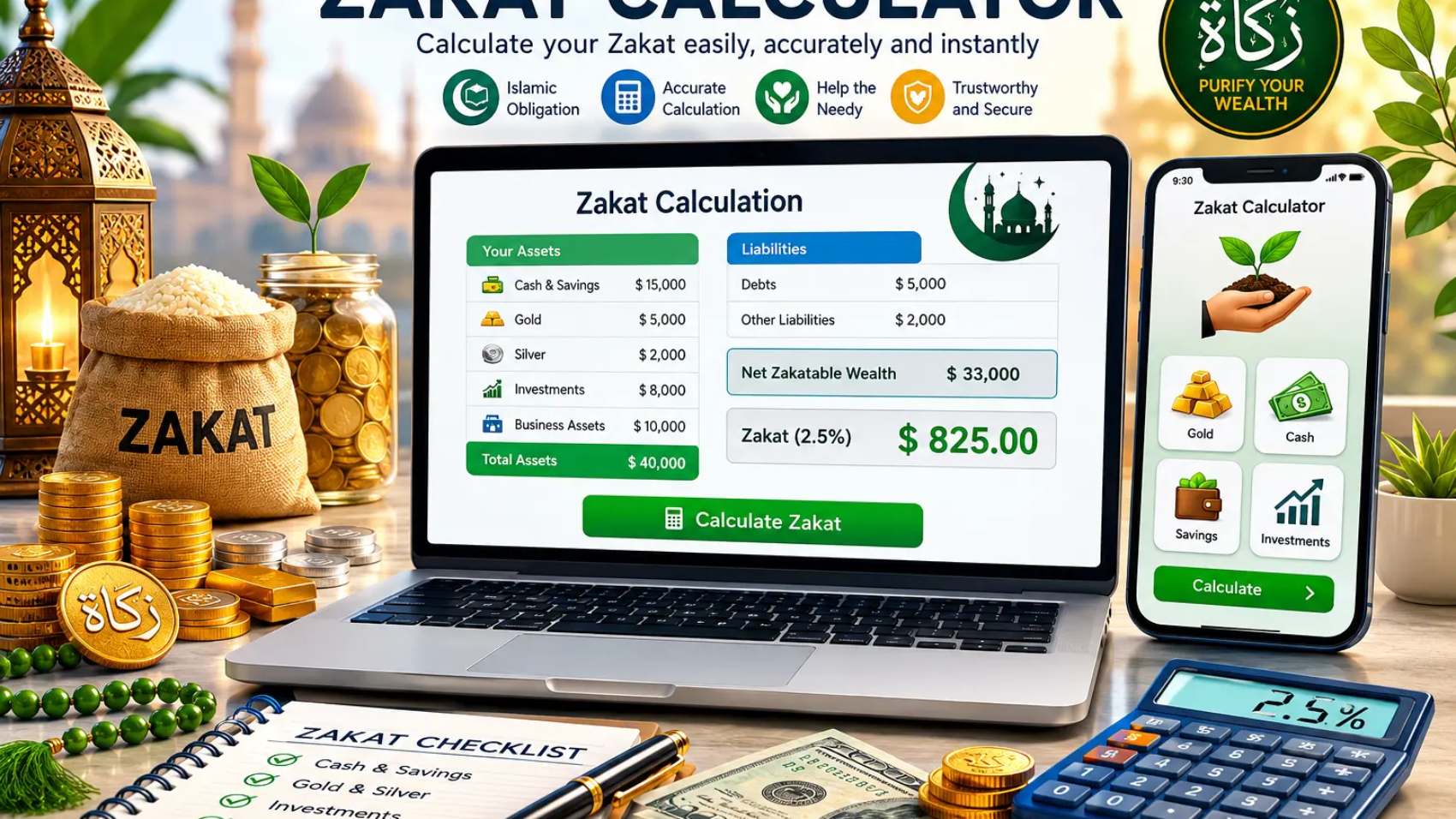
A zakat calculator is a simple tool that helps Muslims find the amount of Zakat they need to pay. Zakat is one of the main pillars of Islam. It is an act of worship and a duty for Muslims who own wealth above a set limit called Nisab. This tool makes the process easy because it helps calculate wealth, savings, gold, silver, business assets, and other items.
Many people own different types of assets. Because of this, manual calculations can take time. A zakat calculator helps reduce mistakes and gives a quick result. It follows the basic rules of Islamic finance and helps people understand their obligations.
Today, many websites and apps provide this tool. You can enter your financial details and get a result within seconds. This process saves time and helps ensure accuracy. As a result, more Muslims use digital tools to manage their Zakat responsibilities every year.
What Is Zakat
Zakat is a compulsory charity in Islam. Muslims who meet the required conditions must give a portion of their wealth to eligible people. The purpose of Zakat is to help those in need and create balance in society. The word Zakat means purification and growth. Muslims believe that giving Zakat purifies wealth and brings blessings.
It also helps reduce poverty and supports community welfare. Because of this, Zakat holds great importance in Islamic teachings. The standard Zakat rate is 2.5% of eligible wealth. This amount applies after a person owns wealth above the Nisab threshold for one lunar year. The payment supports categories of people mentioned in the Quran.
Why a Zakat Calculator Is Important
A zakat calculator helps people calculate their obligations with ease. Many individuals have savings, investments, gold, silver, and business assets. Tracking all these items can become difficult without proper calculations. This tool organizes financial information in one place. It helps users enter their assets and liabilities before generating a final result.
As a result, the calculation becomes simple and clear. Look, even a small mistake can affect the amount of Zakat. A calculator reduces errors and improves confidence. Many people prefer this method because it saves effort and provides fast results.
Understanding Nisab
Nisab is the minimum amount of wealth a Muslim must own before Zakat becomes obligatory. If wealth remains above this level for one lunar year, Zakat becomes due. The Nisab value is based on gold or silver. Islamic scholars use these standards because they have historical importance in Islamic finance.
The exact value changes because market prices change over time. Many scholars encourage checking current gold and silver prices before calculating Zakat. A zakat calculator often updates these values automatically. This feature makes calculations easier and more accurate.
Nisab Based on Gold and Silver
| Standard | Weight |
| Gold Nisab | 87.48 grams |
| Silver Nisab | 612.36 grams |
The monetary value changes according to market rates. Therefore, users should verify current prices before making calculations.
Who Must Pay Zakat
Zakat becomes obligatory for Muslims who meet certain conditions. First, the person must be Muslim. Second, the person must own wealth above Nisab. Third, the wealth must remain above Nisab for one lunar year. Adults usually calculate and pay their own Zakat.
Guardians may manage finances for children in certain situations according to scholarly opinions. Islamic scholars may differ on specific cases. Trust me, understanding eligibility helps avoid confusion. A person who does not meet the required conditions does not need to pay Zakat. Therefore, checking eligibility remains an important first step.
Assets Included in Zakat Calculation
Many forms of wealth count toward Zakat. These assets increase a person’s financial resources and may be subject to the 2.5% rate. Cash savings are among the most common assets. Money kept in bank accounts, cash at home, and foreign currency usually count toward the calculation.
The total value should be added together. Gold, silver, investments, business inventory, and certain receivables may also qualify. Because of this, a complete review of finances is important before calculating Zakat.
Common Zakatable Assets
| Asset Type | Usually Included |
| Cash Savings | Yes |
| Gold | Yes |
| Silver | Yes |
| Business Inventory | Yes |
| Stocks and Investments | Often Yes |
| Rental Property Value | Usually No |
| Rental Income Saved | Yes |
| Retirement Funds | Depends on Access |
Cash and Savings in Zakat
Cash remains one of the easiest assets to calculate. Any money that belongs to you and remains in your possession should generally be counted. Savings accounts, current accounts, and emergency funds often qualify. The total value should be combined before calculations begin.
This method provides a clear financial picture. Many people forget small savings accounts. However, every eligible amount should be included. A calculator helps collect these figures and create an accurate result.
Gold and Silver in Zakat
Gold and silver play a major role in Zakat calculations. Their value often helps determine Nisab. In addition, owned gold and silver may themselves be subject to Zakat. Jewelry rules may vary among scholars. Some scholars include personal jewelry while others provide different opinions depending on use and local interpretation.
Because of this, many people consult knowledgeable scholars for guidance. A zakat calculator often includes sections for gold and silver. Users enter weight or value, and the tool calculates the total automatically. This feature saves time and reduces manual work.
Business Assets and Zakat
Business owners have additional responsibilities when calculating Zakat. Inventory often counts as a zakatable asset because it is held for trade and profit. Products for sale, stock, and trade goods usually become part of the calculation.
Business cash reserves may also qualify. Therefore, business owners should review records carefully. Like any financial process, accurate bookkeeping helps produce correct results. A calculator can organize inventory values and make the process easier for entrepreneurs.
Investments and Stocks
Investments can affect Zakat calculations. Stocks, shares, and investment portfolios may qualify depending on their purpose and structure. Some scholars assess investments based on market value. Others may consider the nature of the company and the intention behind ownership.
Investors often seek guidance for complex portfolios. Modern zakat calculators provide dedicated investment sections. This feature helps users include financial assets without confusion. As a result, investment-related calculations become more manageable.
Debts and Liabilities
Islam allows certain debts to be deducted before calculating Zakat. This adjustment helps reflect a person’s actual financial position. Short-term liabilities often receive attention during calculations. These may include immediate obligations that require payment.
The remaining wealth becomes the basis for determining Zakat. Bro, many people forget to include liabilities. This mistake can change the final result. Therefore, reviewing debts carefully is an important part of the process.
Formula Used in a Zakat Calculator
Most calculators follow a simple process. First, they total eligible assets. Next, they subtract qualifying liabilities. Finally, they apply the Zakat percentage. The standard rate for most wealth is 2.5%. This rate has remained a central part of Islamic financial practice for centuries.
The final amount becomes the Zakat obligation. The best zakat calculator makes this process simple and fast. Users only enter financial figures, and the tool performs the calculations automatically. This approach reduces complexity and improves accuracy.
Basic Zakat Formula
Total Assets – Eligible Liabilities = Net Zakatable Wealth
Net Zakatable Wealth × 2.5% = Zakat Due
Benefits of Using a Zakat Calculator
A calculator offers convenience and accuracy. Many users appreciate the ability to calculate Zakat within minutes. This efficiency saves time during busy schedules. The tool also helps improve financial awareness. Users gain a clearer understanding of their wealth and obligations.
As a result, they can plan their finances more effectively. You know, many people feel uncertain when calculating Zakat manually. A digital calculator provides structure and guidance. This feature increases confidence and encourages timely payment.
How to Use a Zakat Calculator Step by Step
Using a zakat calculator is simple. First, collect all financial information. This includes cash, bank balances, gold, silver, investments, and business assets. Accurate numbers help produce accurate results. Next, enter each asset into the correct field. Many calculators have separate sections for savings, precious metals, investments, and business inventory.
This structure keeps information organized and easy to review. After that, enter eligible liabilities. These may include short-term debts and immediate financial obligations. The calculator subtracts these amounts from total assets before calculating Zakat. Finally, review the result carefully. The calculator applies the 2.5% rate and displays the amount due. This process helps users fulfill their obligation with confidence and clarity.
Preparing Financial Information Before Calculation
Preparation makes the calculation process easier. A person should gather bank statements, investment records, and information about gold and silver holdings. This step helps prevent missing important assets. Business owners should also collect inventory reports and cash flow records.
These documents provide a complete picture of business wealth. Good records improve calculation accuracy. Many people create a yearly financial checklist. This habit helps track assets throughout the year. As a result, Zakat calculations become faster and more organized.
Financial Information Checklist
| Item | Required |
| Bank Balances | Yes |
| Cash at Home | Yes |
| Gold Value | Yes |
| Silver Value | Yes |
| Investment Records | Yes |
| Business Inventory | If Applicable |
| Debt Information | Yes |
Zakat on Salary Savings
Salary itself does not receive Zakat when earned. However, money saved from salary becomes part of zakatable wealth if it remains in possession and meets Nisab conditions. Many people receive monthly income and save a portion. Over time, these savings may grow above the Nisab threshold.
Once the required period passes, Zakat becomes due on the saved amount. A zakat calculator helps combine salary savings with other assets. This method provides a complete financial overview and ensures correct calculations.
Zakat on Business Income
Business income often contributes to zakatable wealth. Cash generated from business activities usually becomes part of total assets. Business owners should review their finances carefully before calculating. Trade inventory also plays a major role.
Products intended for sale generally count toward Zakat. Their market value is included during calculations. Like other assets, business wealth receives the standard 2.5% rate after meeting the required conditions. Good accounting records make this process much easier.
Zakat on Gold Jewelry
Gold jewelry often creates questions during Zakat calculations. Different scholarly opinions exist regarding personal jewelry. Therefore, many Muslims seek guidance based on their school of thought. When jewelry qualifies for Zakat, its current value becomes important.
Users should calculate the market value of the gold before entering it into a calculator. Modern tools often allow entry by weight or value. This flexibility makes the process easier for users with different types of jewelry collections.
Zakat on Silver Holdings
Silver follows many of the same principles as gold. If a person owns silver above relevant thresholds, its value may become part of zakatable wealth. Silver prices often differ greatly from gold prices.
Current market values should always be checked before calculations begin. Accurate pricing improves calculation accuracy. Many calculators update silver values automatically. This feature saves time and helps users avoid manual conversion errors.
Zakat on Stocks and Shares
Stocks represent ownership in companies. Therefore, they may influence Zakat obligations depending on investment goals and asset structure. Long-term investors often review the nature of their holdings before calculating. Some approaches focus on market value, while others consider underlying assets.
Scholarly guidance remains useful for complex investments. A calculator helps organize stock values and include them in the overall calculation. This process simplifies what might otherwise become a complicated task.
Zakat on Mutual Funds
Mutual funds combine multiple investments into one portfolio. Because these funds contain different asset types, Zakat calculations may require careful review. Investors often examine fund composition before calculating obligations.
The exact method may vary according to scholarly interpretation and investment structure. Many financial tools now include sections specifically for mutual funds. This feature helps investors calculate obligations more efficiently.
Zakat on Retirement Accounts
Retirement accounts have become common in many countries. Their treatment can vary depending on access, withdrawal conditions, and local regulations. Some scholars focus on accessible funds, while others apply different approaches.
Reviewing scholarly guidance remains important when calculating retirement-related wealth. A zakat calculator can help estimate obligations when retirement assets qualify. This process helps users include long-term savings in financial planning.
Zakat on Rental Income
Property used for rental purposes follows specific rules. The building itself often does not receive Zakat if it is held for rental income rather than resale. Rental income that accumulates as savings may become zakatable wealth.
Once saved funds meet the required conditions, they become part of the calculation. Trust me, many property owners overlook saved rental income. Including these funds helps ensure accurate Zakat calculations.
Zakat on Property Held for Sale
Property purchased for resale may receive different treatment from rental property. Real estate intended for trading often becomes part of business or investment assets. The current market value may influence calculations depending on scholarly guidance.
Accurate valuation becomes important during the calculation process. Many investors use calculators to organize property values and combine them with other assets. This method improves efficiency and accuracy.
Zakat on Agricultural Wealth
Agricultural wealth has unique rules in Islamic finance. Crops and harvests may follow specific guidelines that differ from standard wealth calculations. Factors such as irrigation methods and crop types can affect obligations.
Farmers often review relevant rulings before calculating Zakat. Specialized calculators sometimes include agricultural sections. These tools help farmers understand obligations while following established guidelines.
Zakat on Livestock
Livestock has a long history within Islamic financial rulings. Animals such as camels, cattle, and sheep may have separate calculation methods. The number of animals often influences obligations.
Traditional guidelines provide detailed standards for livestock owners. Although livestock calculations differ from ordinary wealth calculations, modern tools can simplify the process and improve record keeping.
Zakat on Cryptocurrency
Cryptocurrency has become an important topic in modern Islamic finance. Digital assets such as Bitcoin and other cryptocurrencies may be considered part of personal wealth. Many scholars treat cryptocurrency as a financial asset when calculating Zakat.
Current market value often becomes the basis for determining obligations. Look, digital asset prices can change quickly. Therefore, checking current values before calculation helps produce more accurate results.
Zakat on Foreign Currency
People who hold foreign currency should include its value when calculating Zakat. The amount should be converted into the local currency using current exchange rates. Foreign savings accounts and cash reserves may also qualify as zakatable assets.
Therefore, all currency holdings should be reviewed carefully. Many online calculators automatically convert values. This feature makes calculations easier and reduces conversion errors.
Common Mistakes During Zakat Calculation
One common mistake involves forgetting assets. Small savings accounts, investment balances, and stored cash sometimes go unnoticed. These omissions can affect the final result. Another mistake involves using outdated market values.
Gold, silver, and investment prices change regularly. Current values improve calculation accuracy. Some people also forget eligible liabilities. Proper debt review helps create a more realistic picture of financial standing before applying the Zakat rate.
Common Calculation Errors
| Mistake | Impact |
| Missing Assets | Lower Result |
| Old Gold Prices | Inaccurate Value |
| Ignoring Debts | Higher Result |
| Wrong Currency Rate | Incorrect Total |
| Missing Investments | Incomplete Calculation |
Keeping Annual Zakat Records
Annual records make future calculations easier. A person can track assets, liabilities, and previous Zakat payments in one place. Digital spreadsheets often help organize financial information.
These records provide useful comparisons from year to year and improve consistency. You know, organized records reduce stress during Zakat season. They also help users identify changes in wealth and financial growth over time.
Benefits of Digital Zakat Tools
Digital calculators offer speed and convenience. Users can access them from phones, tablets, or computers without complex calculations. Many tools update market prices automatically. This feature improves accuracy and reduces manual work.
As a result, users receive reliable calculations more quickly. Modern calculators also improve financial awareness. They help people understand assets, liabilities, and overall wealth in a structured way.
Planning for Future Zakat Payments
Financial planning makes Zakat easier throughout the year. Many people set aside small amounts each month to prepare for future obligations. This strategy reduces pressure when payment time arrives.
It also helps maintain consistent charitable giving and financial discipline. Bro, good planning creates peace of mind. A simple savings habit can make annual Zakat payments smooth and manageable for most households.
Real-Life Zakat Calculation Example
A practical example helps explain the process clearly. Imagine a person has $8,000 in savings, $4,000 worth of gold, and $3,000 in investments. The total zakatable assets equal $15,000. The same person also has a short-term debt of $2,000.
This debt qualifies as an eligible liability. Therefore, it can be deducted before calculating Zakat. After subtracting the debt, the net zakatable wealth becomes $13,000. Applying the 2.5% Zakat rate gives a final obligation of $325. A zakat calculator performs this calculation quickly and accurately.
Example Calculation Table
| Item | Amount |
| Savings | $8,000 |
| Gold | $4,000 |
| Investments | $3,000 |
| Total Assets | $15,000 |
| Eligible Debt | $2,000 |
| Net Wealth | $13,000 |
| Zakat Due (2.5%) | $325 |
Advanced Zakat Example for Business Owners
Business owners often have more assets to review. A small business may hold inventory, cash reserves, and outstanding receivables. These items can affect the final calculation. Suppose a business owner has inventory worth $20,000, business cash of $10,000, and receivables worth $5,000.
The total business assets equal $35,000. If short-term business liabilities total $5,000, the net wealth becomes $30,000. Applying the 2.5% rate results in a Zakat obligation of $750.
Who Can Receive Zakat
Islam identifies specific groups that may receive Zakat. The goal is to support those who need financial assistance and strengthen social welfare. Poor individuals often receive support through Zakat funds. People who struggle to meet daily needs may qualify for assistance.
This support helps improve living conditions and reduce hardship. Other eligible categories may include travelers in difficulty, people burdened by debt, and individuals working in approved Zakat administration roles. Local scholarly guidance can provide detailed information.
Supporting Families Through Zakat
Many families face financial challenges because of income limitations or unexpected expenses. Zakat can provide meaningful support during difficult times. Financial assistance may help cover food, clothing, education, and essential living costs.
This support creates stability and reduces economic pressure. Because of this social benefit, Zakat remains an important tool for community development. It helps create stronger connections between those who give and those who receive.
Who Cannot Receive Zakat
Certain individuals are generally not eligible to receive Zakat. Immediate dependents whom a person already supports financially usually do not qualify for receiving that person’s Zakat. Parents, grandparents, children, and grandchildren often fall into this category.
Their support remains a direct responsibility rather than a Zakat distribution. Specific rules can vary based on circumstances and scholarly interpretation. Therefore, many people seek guidance before distributing Zakat funds.
Best Time to Calculate Zakat
Many Muslims choose a fixed date each year for calculating Zakat. This habit creates consistency and makes record keeping easier. A regular calculation date helps track assets and liabilities over time.
It also reduces the chance of forgetting annual obligations. Some people select a date during the lunar year and continue using it every year. This simple system helps maintain financial discipline and accuracy.
Choosing the Right Zakat Calculator
Many online tools are available today. A good calculator should provide clear instructions, updated values, and simple navigation. Users should look for calculators that support different asset types.
Features for gold, silver, investments, and business assets improve accuracy. Trust me, a well-designed calculator saves time and reduces confusion. Reliable tools make the entire process smoother and easier to understand.
Online vs Manual Calculation
Manual calculations work well for simple financial situations. People with only savings and cash may find manual methods manageable. Complex finances often require additional effort. Investments, business inventory, and multiple accounts increase calculation difficulty. Online calculators simplify these situations. They organize information automatically and provide quick results while reducing calculation errors.
How Zakat Helps Society
Zakat creates positive economic effects within communities. Wealth moves from those with surplus resources to those facing financial difficulties. This redistribution helps reduce poverty and supports essential needs.
Families gain access to food, clothing, healthcare, and education support. As a result, communities become stronger and more balanced. The social benefits of Zakat extend beyond individual transactions and contribute to collective welfare.
Financial Benefits of Regular Zakat Planning
Regular planning helps people prepare for annual obligations. Small monthly savings can make future payments easier to manage. Financial awareness also improves through regular reviews of assets and liabilities.
This process encourages responsible money management and long-term planning. Like many financial habits, consistency produces better results. Organized planning reduces stress and improves confidence when Zakat becomes due.
Maintaining Accurate Records
Accurate records support better calculations. Documents such as bank statements, investment reports, and inventory records provide reliable information. Regular updates prevent missing assets and improve overall accuracy.
Good records also help verify calculations if questions arise later. Many people use spreadsheets or finance apps for this purpose. These tools keep information organized and easy to access throughout the year.
Understanding Market Value
Market value plays an important role in Zakat calculations. Gold, silver, stocks, and other assets often require current valuations. Using recent market prices improves calculation accuracy.
Outdated values may lead to incorrect results and unnecessary confusion. Many modern calculators update values automatically. This feature helps users calculate obligations based on current financial conditions.
Zakat and Financial Responsibility
Zakat encourages responsible financial behavior. People review their assets, liabilities, and savings on a regular basis. This habit promotes better awareness of personal finances.
It also encourages thoughtful planning and disciplined money management. You know, financial responsibility supports both personal goals and charitable obligations. A structured approach benefits individuals and communities alike.
FAQ’s
The standard Zakat rate for most eligible wealth is 2.5%. This percentage applies after deducting eligible liabilities from zakatable assets. The rate has remained a central part of Islamic financial practice for centuries. Most calculators automatically apply this percentage after completing calculations. Users should still review their information carefully before accepting the final result.
Yes, cash held in bank accounts generally counts as zakatable wealth. Savings accounts and current accounts are commonly included. All eligible balances should be added together before calculating Zakat. This method provides a complete financial picture. A zakat calculator makes this process simple by combining account balances automatically.
Gold jewelry may be included depending on scholarly interpretation and local guidance. Different opinions exist regarding personal jewelry. Many people calculate the value of their gold and review applicable rulings before making a decision. Consulting a knowledgeable scholar can help clarify individual situations.
Eligible debts may reduce the amount of wealth subject to Zakat. Short-term liabilities often receive consideration during calculations. These deductions help reflect a person’s actual financial position before applying the Zakat rate. Accurate debt records improve calculation reliability and fairness.
Most Muslims calculate Zakat once every lunar year. Choosing a consistent date helps maintain accurate records and regular payment habits. Annual calculations also make financial planning easier. A fixed schedule reduces the chance of overlooking obligations. Many people use reminders and digital tools to stay organized.
Conclusion
A zakat calculator is a practical tool that helps Muslims calculate Zakat with speed and accuracy. It organizes financial information, reduces mistakes, and simplifies a process that may otherwise become complex. By combining assets and liabilities in one place, the tool provides a clear picture of financial obligations.
Modern calculators support many asset types, including cash savings, gold, silver, investments, business inventory, and digital assets. These features make calculations easier for individuals, families, and business owners. Accurate records and current market values further improve reliability and confidence.
The best zakat calculator supports proper financial planning and responsible charitable giving. Regular reviews of wealth help users stay organized and prepared throughout the year. Through accurate calculations and timely payments, Muslims can fulfill an important religious obligation while supporting people and communities in need.
Leave Your Comment