
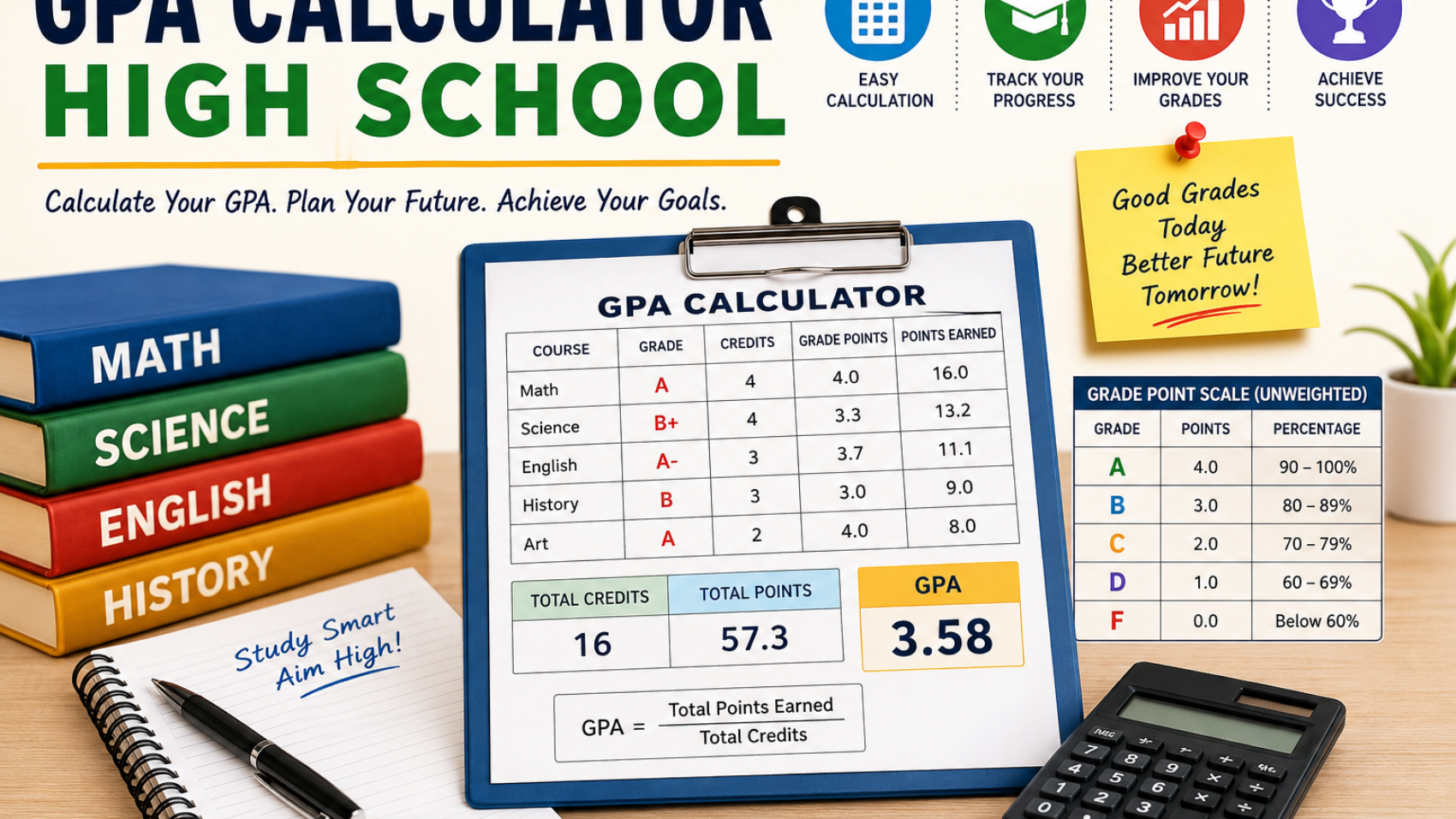
A GPA calculator high school helps students find their Grade Point Average (GPA) with ease. It uses your grades and class credits to show your academic score. This score helps schools, colleges, and scholarship programs check your progress. A GPA calculator saves time and lowers math mistakes. It also helps you plan better for future goals.
Your GPA shows how well you do in school over time. Many high schools use a 4.0 GPA scale, while some use a weighted system for harder classes. You know, a good GPA gives you more choices for college and awards. The gpa calculator high school stands as the best tool to track your grades with speed and accuracy.
What Is a GPA Calculator High School
A GPA calculator high school is an online or offline tool that finds your Grade Point Average from your school grades. It takes each class grade and credit value, then changes them into grade points. After that, it finds the average score. Trust me, this process takes only a few minutes. You can use the result to check your school progress and make smart study plans.
Many students use this tool every semester. It works for regular classes, honors classes, and Advanced Placement courses if your school uses a weighted GPA. The calculator helps you stay on track before report cards arrive. Like many study tools, it gives quick results without hard math. Students, parents, and teachers all use GPA calculators to follow academic growth.
Why GPA Matters in High School
Your GPA tells the story of your school performance. Colleges, universities, and scholarship programs often check GPA before they review other parts of your application. A strong GPA shows that you study well and finish your work on time. Look, good grades also help you build confidence and reach your future goals with less stress.
A higher GPA can open many doors. It may help you join honor programs, school clubs, and special academic activities. Some schools also use GPA to choose student leaders and award winners. You know, keeping track of your GPA each term helps you fix problems before they grow. Small improvements each semester can lead to better results over time.
Common High School Letter Grades
| Letter Grade | Grade Points (4.0 Scale) | Percentage Range |
| A | 4.0 | 90–100% |
| B | 3.0 | 80–89% |
| C | 2.0 | 70–79% |
| D | 1.0 | 60–69% |
| F | 0.0 | Below 60% |
How a GPA Calculator Works
A GPA calculator follows a simple process. First, you enter each course name, grade, and credit hours. Next, the calculator changes each letter grade into grade points. Then it multiplies the grade points by the course credits. Last, it adds the totals and divides them by the total credits. Bro, this method gives a correct GPA in seconds.
Most online GPA calculators also support weighted and unweighted systems. Some tools let you save your grades for future semesters. Others show your cumulative GPA after every term. This helps you compare your progress across the school year. A calculator also lowers the chance of math errors, so your final GPA stays accurate.
GPA Scales Used in High School
Many high schools use an unweighted 4.0 GPA scale. On this scale, every class follows the same grade points. An A equals 4.0, a B equals 3.0, and so on. This system gives every subject equal value. It works well for students who take regular classes during the school year.
Some schools use a weighted GPA scale. Honors, AP, and IB classes earn extra grade points because they have more difficult work. For example, an A in an honors class may count as 4.5, while an A in an AP class may count as 5.0. This system rewards students who choose challenging courses while keeping strong grades.
Grade Points Chart
A grade point chart helps you understand how each letter grade changes into GPA points. Most high schools use this chart as the base for GPA calculations. You can compare your grades with the chart before you enter them into a GPA calculator. This makes the process simple and clear. A small grade change can improve your GPA over time, so checking your scores after each grading period helps you stay on the right path.
Many schools also give different grade points for honors, AP, or IB classes. Always check your school’s grading policy before you calculate your GPA. This helps you avoid mistakes and gives you the correct result. Look, every school may use a slightly different system. A trusted GPA calculator lets you choose the right grading scale for your classes.
Unweighted vs Weighted GPA Scale
| Letter Grade | Unweighted GPA | Honors GPA | AP/IB GPA |
| A | 4.0 | 4.5 | 5.0 |
| B | 3.0 | 3.5 | 4.0 |
| C | 2.0 | 2.5 | 3.0 |
| D | 1.0 | 1.5 | 2.0 |
| F | 0.0 | 0.0 | 0.0 |
Weighted vs Unweighted GPA
An unweighted GPA gives every class the same value. A regular math class and an advanced science class follow the same 4.0 scale. This system keeps grading simple and easy to understand. Many high schools still use this method because it gives a clear picture of a student’s grades. Colleges also review this score during the admission process.
A weighted GPA gives extra points for harder classes. Honors, AP, and IB courses earn higher grade values because they require more work. This system rewards students who take challenging subjects. You know, a weighted GPA may rise above 4.0 because of those extra points. Always learn which system your school follows before you compare your GPA with other students.
Steps to Calculate High School GPA
You can calculate your GPA with a few easy steps. First, write down every class and the final letter grade. Next, change each letter grade into grade points by using your school’s GPA scale. Then multiply the grade points by the class credits. Add every result together. Last, divide the total grade points by the total number of credits. This gives your final GPA.
Many online GPA calculators complete these steps in seconds. You only need to enter your class names, grades, and credits. The calculator handles the math for you. Trust me, this saves time and helps you avoid simple errors. It also lets you test different grade goals for future semesters and see how they affect your overall GPA.
Example GPA Calculation
A student takes four classes with one credit each. The grades are A, A, B, and C. The grade points become 4.0, 4.0, 3.0, and 2.0. Add these points together to get 13. Next, divide 13 by 4 because there are four classes. The final GPA becomes 3.25. This example shows how easy the process becomes with the right formula.
Now imagine one class is an honors course with an A worth 4.5 points. The total grade points become 13.5 instead of 13. The GPA rises to 3.38 after division. Like this example shows, advanced classes can improve a weighted GPA. Always use the correct grading scale before you calculate your results.
Tips to Improve Your GPA
Good study habits help you earn better grades. Finish homework on time and review your lessons every day. Read your notes before each test and ask your teacher when you need help. Small daily actions build stronger learning habits. Bro, steady practice often brings better grades than last-minute studying.
You should also set simple goals for every semester. Track your grades after each assignment and fix weak subjects early. Join study groups if they help you learn. Keep a study schedule and follow it every week. A GPA calculator helps you watch your progress and shows how each new grade changes your overall score.
Common GPA Calculation Mistakes
Many students enter the wrong letter grades or forget class credits. These small errors can change the final GPA. Always check every number before you press the calculate button. Read your report card with care and match every course with the correct grade. This simple habit improves accuracy.
Some students also mix weighted and unweighted grades in the same calculation. This creates an incorrect GPA. Others use an old grading scale that does not match their school. Look, every school may have different rules. Always follow your school’s grading policy and use a GPA calculator that supports the correct scale.
GPA and College Admission
A strong GPA helps you during the college admission process. Many colleges look at your grades before they review other parts of your application. Good grades show that you work hard and learn new skills. Your GPA also shows steady academic progress over several years. A high GPA can improve your chances of getting accepted into your preferred college.
Colleges also review the classes you choose. Advanced courses such as Honors, AP, and IB show that you enjoy learning and accept new challenges. A strong GPA in these classes can make your application more competitive. Keep your grades steady from the first year of high school until graduation for the best results.
GPA and Scholarships
Many scholarship programs use GPA as an important requirement. A high GPA may help you qualify for academic awards and financial aid. Each scholarship has its own rules, so always read the eligibility details before you apply. Good grades can increase your opportunities and reduce education costs.
You should check your GPA every semester before sending scholarship applications. This helps you know whether you meet the required score. A GPA calculator gives quick and accurate results. Trust me, keeping your GPA updated makes the application process easier and helps you prepare for future opportunities.
Benefits of Using an Online GPA Calculator
An online GPA calculator saves time and makes grade tracking simple. You only need to enter your classes, grades, and credit hours. The calculator completes the math and shows your GPA in seconds. This helps you avoid manual calculation errors and gives clear results.
Many GPA calculators also estimate your future GPA. You can enter expected grades and see how they affect your overall average. This feature helps you set realistic academic goals. You know, regular GPA checks help you stay focused and improve your study plan throughout the school year.
Best Time to Check Your GPA
The best time to check your GPA is after each grading period or semester. Regular updates help you understand your academic progress before final exams. Early tracking also gives you enough time to improve weak subjects. This simple habit supports better planning throughout high school.
You should also calculate your GPA before applying for colleges, scholarships, or honor programs. Accurate records help you complete applications with confidence. A GPA calculator makes this process fast and reliable. Checking your GPA often keeps you informed and ready for every academic opportunity.
What is a good GPA in high school?
A GPA of 3.0 or higher is often considered good in many high schools. Higher GPAs may improve college and scholarship opportunities.
Can I calculate my GPA without a calculator?
Yes. You can calculate it by converting grades into grade points, multiplying them by credits, adding the totals, and dividing by the total credits.
What is the difference between weighted and unweighted GPA?
An unweighted GPA uses a standard 4.0 scale for every class. A weighted GPA gives extra points for advanced courses such as Honors, AP, and IB.
How often should I calculate my GPA?
It is a good idea to calculate your GPA after every semester or grading period. This helps you monitor your academic progress.
Do all high schools use the same GPA scale?
No. Some schools use an unweighted 4.0 scale, while others use weighted grading systems. Always follow your school’s grading policy.
Conclusion
A GPA calculator high school helps students understand their academic performance with ease. It gives quick and accurate results by using grades and course credits. This tool also saves time and reduces calculation mistakes. Regular GPA tracking helps students stay focused on their academic goals.
A good GPA supports college admission, scholarship applications, and honor programs. Strong study habits, careful planning, and regular grade checks all help improve your results. Small improvements each semester can make a big difference over time.
The gpa calculator high school is the best way to monitor your academic progress and plan for future success. Use it after every grading period to stay informed, set clear goals, and build a stronger academic record with confidence.
Leave Your Comment