
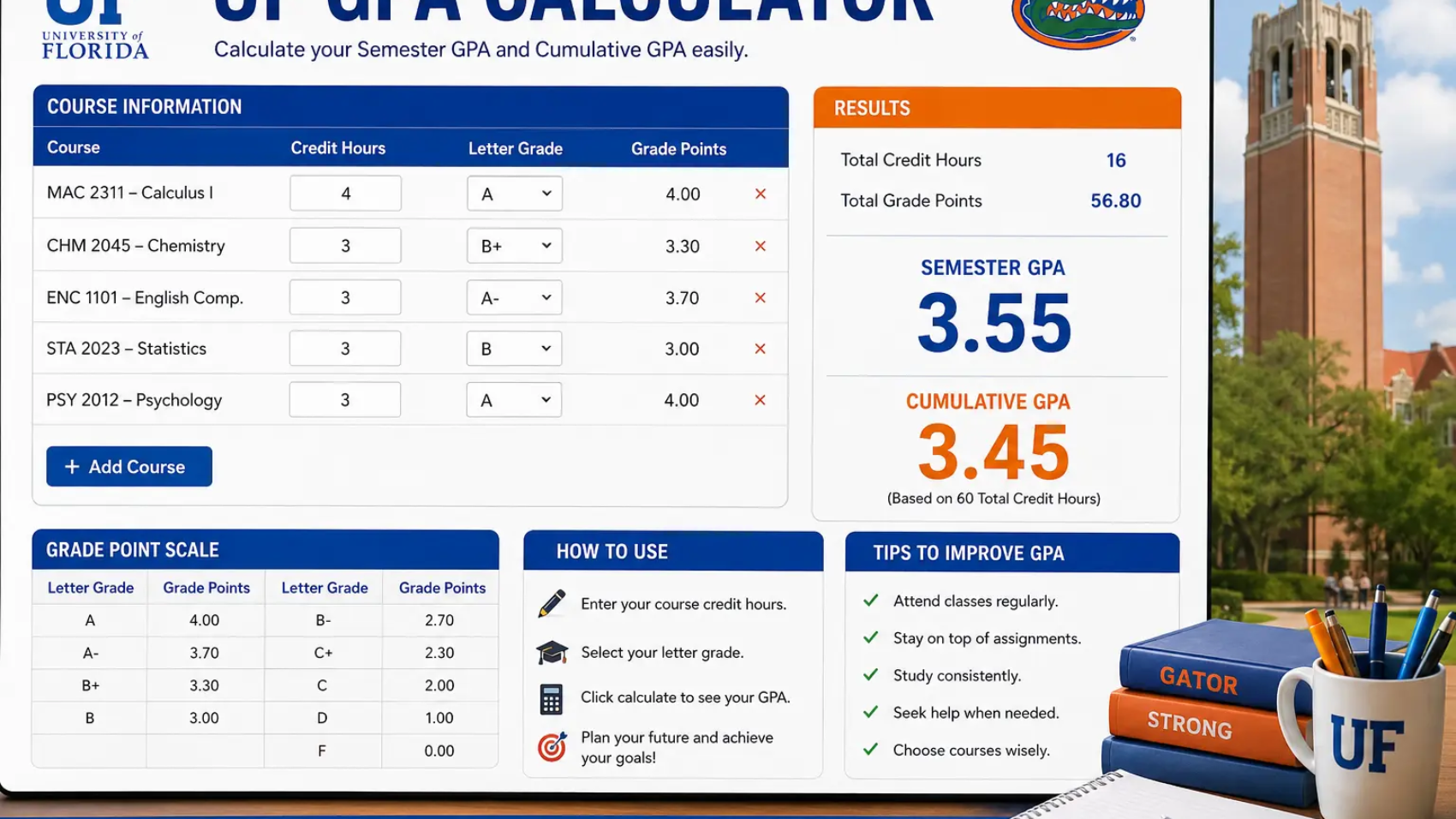
College grades matter a lot. They help students track progress and understand academic performance. A GPA is one of the most common ways schools measure grades. Many students use a UF GPA calculator to estimate their grade point average and stay on track during each semester.
A UF GPA calculator is a simple tool that helps students calculate their GPA based on course credits and letter grades. It saves time and reduces mistakes. Moreover, it gives a quick view of academic standing. Students can use it before final grades arrive to understand possible results.
The UF GPA calculator is one of the best tools for academic planning. It helps students make better decisions about classes and study goals. In addition, it allows students to monitor performance throughout the year. As a result, students gain more control over their education journey.
What Is a UF GPA Calculator?
A UF GPA calculator is an online academic tool designed to estimate grade point average. It uses course credits and letter grades to produce a GPA score. Students can quickly check their academic progress without doing long calculations by hand. The calculator follows the GPA system used by the University of Florida.
Each letter grade has a grade point value. For example, an A usually equals 4.0 points, while a B equals 3.0 points. The calculator combines these values with credit hours to create an overall GPA. Many students use this tool before registration periods.
Others use it after exams. Look, knowing your GPA early can help you set realistic goals. It also helps students understand where improvement is needed before the next semester starts.
Why GPA Matters for Students
GPA plays a major role in academic success. Colleges use GPA to evaluate student performance. A strong GPA often opens doors to scholarships, internships, and academic programs. Many employers also review GPA when hiring recent graduates. A higher GPA may show discipline, consistency, and commitment.
As a result, students often work hard to maintain strong academic records throughout college. Trust me, GPA affects more than grades. It can influence future opportunities and academic confidence. Therefore, students should monitor their GPA regularly and use planning tools whenever possible.
Understanding the GPA Scale
Most universities use a 4.0 GPA scale. Under this system, each letter grade receives a numerical value. Then, the values combine with course credits to calculate the final GPA.
| Letter Grade | Grade Points |
| A | 4.0 |
| A- | 3.7 |
| B+ | 3.3 |
| B | 3.0 |
| C | 2.0 |
| D | 1.0 |
| F | 0.0 |
The GPA scale creates a standard way to compare academic performance. Students from different majors can understand their standing using the same system.
Knowing the GPA scale helps students estimate future results. Moreover, it allows them to set grade targets before exams. This knowledge supports better academic planning throughout college.
How a UF GPA Calculator Works
A GPA calculator uses a simple formula. First, it converts letter grades into grade points. Next, it multiplies grade points by credit hours. Finally, it divides total quality points by total credit hours. The process may sound complex.
The calculator performs the work instantly. Students only need to enter course information and grades. Bro, this saves a lot of time during busy semesters. Instead of solving equations manually, students receive accurate estimates within seconds. As a result, academic planning becomes much easier.
Basic GPA Formula
The GPA formula looks like this:
[
GPA = \frac{\text{Total Grade Points Earned}}{\text{Total Credit Hours}}
]
This formula remains the foundation of most GPA calculations. Understanding it helps students verify results and learn how grades affect averages.
Information Needed for GPA Calculation
Students need several pieces of information before using the calculator. First, they must know course credit hours. Second, they need expected or earned letter grades. Each class contributes differently because credit hours vary.
A four-credit course often affects GPA more than a one-credit course. Accurate information produces accurate results. As a result, students should double-check grades and credits before entering data into the calculator.
Required Data Checklist
| Information | Purpose |
| Course Name | Identify class |
| Credit Hours | Determine weight |
| Letter Grade | Assign grade points |
| Semester Data | Calculate term GPA |
| Previous GPA | Estimate cumulative GPA |
Benefits of Using a UF GPA Calculator
The biggest benefit is speed. Students can calculate GPA in seconds. They spend less time doing manual calculations. Another benefit is accuracy. Human errors often occur during calculations.
GPA calculators reduce mistakes and provide reliable estimates. Like many academic tools, GPA calculators improve planning. Students can test different grade scenarios and understand how future performance may affect overall GPA.
Academic Planning With GPA Calculators
Academic planning becomes easier when students know their GPA. They can decide whether to take additional courses, repeat classes, or focus on difficult subjects. Students often create semester goals based on GPA targets.
For example, a student aiming for a 3.5 GPA can estimate the grades needed to reach that goal. Planning ahead reduces stress. Moreover, it helps students stay organized throughout the semester. As a result, they can make informed academic decisions.
Difference Between Semester GPA and Cumulative GPA
Semester GPA measures performance during one term. It only includes classes taken in that specific semester. It reflects short-term academic performance. Cumulative GPA includes all completed coursework. It combines grades from multiple semesters into one average.
As a result, it provides a broader picture of academic achievement. Students should understand both values. Semester GPA shows current progress, while cumulative GPA reflects overall academic history.
GPA Comparison Table
| GPA Type | Coverage |
| Semester GPA | One academic term |
| Cumulative GPA | All completed semesters |
| Major GPA | Courses within a major |
| Program GPA | Specific academic program |
Common GPA Calculation Mistakes
Many students enter incorrect credit hours. GPA estimates become inaccurate. Double-checking course details helps prevent this issue. Another common mistake involves using the wrong grade values. Different schools may have slight variations in grading scales.
As a result, students should verify grade point conversions. Some students forget to include every course. Look, even one missing class can change the final GPA. Therefore, complete information is essential for reliable results.
How Credit Hours Affect GPA
Credit hours determine the weight of each course. Courses with more credits have a larger impact on GPA calculations. For example, an A in a four-credit course contributes more grade points than an A in a one-credit course.
As a result, performance in high-credit classes becomes especially important. Students should pay close attention to course weights. This understanding helps them prioritize study time and manage workloads effectively.
Using GPA Estimates for Goal Setting
Goal setting becomes easier when students know their current GPA. They can create realistic academic targets for future semesters. Students often use GPA projections to explore different outcomes.
For example, they may calculate how several A grades could improve cumulative GPA. This approach encourages better planning and motivation. Moreover, it helps students stay focused on long-term academic success rather than short-term challenges.
How GPA Influences Scholarships
Scholarships often depend on academic performance. GPA becomes one of the most important factors during scholarship reviews. Many organizations use GPA requirements to identify students who maintain consistent academic achievement. A strong GPA can increase access to merit-based financial aid.
It may improve eligibility for academic awards and special programs. As a result, students with higher GPAs often have more funding opportunities available. Students should monitor GPA throughout each semester. This habit helps maintain scholarship eligibility and supports long-term academic goals. Consistent effort across all courses often leads to stronger results over time.
GPA and Academic Standing
Academic standing reflects a student’s performance according to university standards. GPA plays a key role in determining whether a student remains in good standing. Most colleges establish minimum GPA requirements. Students who fall below those levels may face academic warnings or probation.
As a result, regular GPA tracking becomes an important part of academic success. Knowing current GPA helps students respond early to academic challenges. Moreover, it provides time to seek tutoring, advising, or study support before problems become larger.
How Transfer Credits Affect GPA
Transfer credits help students continue their education after moving from another institution. However, transfer policies vary between universities. Therefore, students should review official academic guidelines carefully. In many cases, transfer credits count toward degree requirements but do not affect institutional GPA.
As a result, students may see earned credits without changes to their university GPA. Understanding transfer policies helps students create realistic academic plans. Moreover, it prevents confusion when reviewing transcripts and graduation requirements.
Predicting Future GPA
Many students use GPA calculators to estimate future academic outcomes. They can understand how upcoming grades may affect overall performance. Predictive calculations allow students to test different scenarios.
For example, they can compare the impact of earning A grades versus B grades in future courses. As a result, students gain a clearer understanding of academic goals. Future GPA estimates support informed decision-making. They also help students prioritize study efforts in courses with greater academic weight.
Example GPA Projection
| Current GPA | Future Semester GPA | Estimated New GPA |
| 3.00 | 3.80 | 3.25 |
| 3.20 | 3.90 | 3.42 |
| 3.50 | 4.00 | 3.67 |
| 3.70 | 4.00 | 3.82 |
Importance of Accurate Grade Entry
Accurate grade information is essential for reliable GPA calculations. Students should verify every grade before entering data into a calculator. Small mistakes can create misleading results.
For example, entering a B instead of a B+ may lower estimated GPA. As a result, planning decisions may become less effective. Double-checking information improves accuracy and confidence. Moreover, it ensures that academic plans are based on dependable calculations.
GPA Goals for Different Academic Paths
Different academic programs often have different GPA expectations. Students should understand requirements related to their field of study. Competitive programs may require higher GPA levels.
Some graduate schools place strong emphasis on academic performance during admissions reviews. Clear GPA goals help students stay focused. As a result, they can create study plans that align with future educational and career objectives.
Common GPA Targets
| Academic Goal | Recommended GPA |
| Good Standing | 2.0+ |
| Scholarship Eligibility | 3.0+ |
| Honors Programs | 3.5+ |
| Competitive Graduate Programs | 3.7+ |
Strategies to Improve GPA
Improving GPA requires consistent effort and smart planning. Students should focus on both study habits and time management. Attending classes regularly helps students understand course material more effectively.
Active participation often improves learning and retention. Strong organization supports academic growth. Students who track assignments, deadlines, and exams often achieve better results throughout the semester.
Step 1: Create a Study Schedule
A structured study schedule provides direction and consistency. Students can dedicate time to each subject without feeling overwhelmed. Breaking study sessions into smaller blocks improves concentration.
As a result, learning becomes more manageable and productive. Regular study habits often lead to stronger academic performance. Moreover, they reduce last-minute stress before major exams.
Step 2: Focus on High-Credit Courses
High-credit classes carry greater weight in GPA calculations. Therefore, success in these courses often has a larger impact on overall GPA. Students should allocate sufficient study time to demanding classes.
They should seek help when difficulties arise. Prioritizing important courses creates stronger academic outcomes. As a result, students may improve GPA more efficiently.
Step 3: Use Academic Support Resources
Most universities provide tutoring centers, writing labs, and academic advising services. Therefore, students should take advantage of these resources whenever needed. Support services help clarify difficult concepts and strengthen learning skills.
They offer guidance for challenging courses. Students who seek assistance early often experience better academic results. This proactive approach supports GPA improvement and long-term success.
Time Management and GPA Success
Time management plays a major role in academic achievement. Therefore, students should create daily and weekly plans for coursework. Organized schedules reduce missed assignments and forgotten deadlines.
As a result, students maintain stronger performance throughout the semester. Good time management also supports balance. Students can allocate time for classes, study sessions, activities, and personal responsibilities without sacrificing academic progress.
The Relationship Between Attendance and GPA
Class attendance supports understanding and engagement. Therefore, students who attend regularly often perform better academically. Instructors frequently discuss important concepts during lectures.
Classroom participation encourages active learning and deeper comprehension. Consistent attendance strengthens academic habits. As a result, students often see positive effects on grades and overall GPA.
Building Strong Study Habits
Strong study habits create a foundation for academic growth. Therefore, students should develop routines that encourage consistent learning. Reviewing notes regularly helps reinforce important concepts.
Practice exercises improve understanding and retention. Small daily efforts often produce meaningful results. As a result, students may experience steady GPA improvement over time.
Managing Difficult Courses
Some courses present greater academic challenges. Therefore, students should approach difficult subjects with preparation and persistence. Breaking complex topics into smaller sections makes learning easier.
Study groups can provide additional perspectives and support. Early action often prevents academic struggles from becoming larger problems. As a result, students can maintain stronger performance even in demanding classes.
Monitoring Progress Throughout the Semester
Regular GPA monitoring helps students stay aware of academic performance. Therefore, they can make adjustments before final grades arrive. Tracking grades after assignments and exams provides useful insights.
It highlights strengths and areas for improvement. Students who review progress consistently often make better academic decisions. As a result, they remain focused on achieving long-term goals.
Digital Tools That Support GPA Management
Modern academic tools simplify grade tracking and planning. Therefore, many students use digital resources alongside GPA calculators. Online planners, grade trackers, and study apps improve organization.
They help students manage coursework more effectively. Technology supports academic success when used wisely. As a result, students gain better control over schedules, assignments, and performance goals.
Long-Term Benefits of Maintaining a Strong GPA
A strong GPA offers benefits beyond college. Therefore, maintaining good academic performance can create future opportunities. Graduate schools often consider GPA during admissions decisions.
Some employers review academic records when evaluating candidates. Strong academic achievement demonstrates dedication and consistency. As a result, students may gain advantages in education, career development, and professional growth.
GPA Recovery After a Difficult Semester
A difficult semester does not define a student’s academic future. Therefore, students should focus on improvement rather than past results. Many successful graduates experienced academic challenges before achieving strong performance. The first step involves reviewing previous coursework.
Students should identify subjects, habits, or situations that affected grades. As a result, they can create a clear improvement plan for future semesters. Consistent effort often produces positive changes. Moreover, steady progress helps rebuild confidence and academic momentum over time.
Choosing Courses Wisely
Course selection affects both learning and GPA. Therefore, students should build schedules that match their academic strengths and degree requirements. A balanced schedule often works best. Students can combine challenging courses with classes that match their skills and interests.
As a result, workload management becomes easier throughout the semester. Academic advisors can provide valuable guidance during registration. Moreover, their recommendations help students make informed decisions about future coursework.
The Role of Academic Advising
Academic advisors support students throughout their educational journey. Therefore, regular meetings with advisors can improve planning and decision-making. Advisors help students understand graduation requirements, course options, and academic policies.
They can identify strategies for GPA improvement. Professional guidance reduces uncertainty. As a result, students often feel more confident about their academic path and future goals.
Understanding Grade Trends
Grade trends show how academic performance changes over time. Therefore, students should review results from multiple semesters instead of focusing on a single term. Positive trends indicate growth and improvement.
They demonstrate commitment to learning and academic development. Monitoring trends helps students recognize patterns. As a result, they can strengthen effective habits and address weaker areas more efficiently.
Balancing Extracurricular Activities and GPA
Extracurricular activities provide valuable experiences outside the classroom. Therefore, students should balance these commitments with academic responsibilities. Clubs, volunteer work, and leadership roles support personal growth.
Proper scheduling remains important for maintaining academic performance. Balanced involvement creates a healthy college experience. As a result, students can develop skills while protecting their GPA goals.
Avoiding Common GPA Planning Errors
Many students focus only on final exams. Therefore, they overlook assignments, quizzes, and participation grades that contribute to course performance. Another mistake involves waiting too long to seek help.
Early support often prevents small academic challenges from becoming major issues. Students should also avoid unrealistic expectations. As a result, they can create achievable goals that encourage steady progress and long-term success.
Semester Preparation Tips
Preparing before a semester begins improves academic readiness. Therefore, students should review course requirements and organize study materials early. Creating a calendar for assignments and exams helps manage workload effectively.
Early preparation reduces stress during busy academic periods. Strong preparation builds confidence. As a result, students start each semester with a clear plan and greater focus.
Semester Success Checklist
| Task | Benefit |
| Review Course Syllabus | Understand expectations |
| Create Study Plan | Improve organization |
| Track Deadlines | Reduce missed work |
| Meet Advisors | Receive guidance |
| Monitor Grades | Stay informed |
Maintaining Motivation Throughout College
Motivation supports academic consistency. Therefore, students should connect daily efforts with long-term educational goals. Small achievements create momentum. Moreover, celebrating progress encourages continued commitment to academic success. Students who remain focused on personal growth often perform better over time. As a result, they maintain stronger academic habits and GPA outcomes.
Building a Strong Academic Foundation
Academic success begins with solid learning habits. Therefore, students should prioritize note-taking, reading, and regular review sessions. Strong foundations improve understanding across multiple subjects. In addition, they support better performance during exams and assignments.
Consistent learning practices create long-term benefits. As a result, students develop skills that support both GPA improvement and future success.
Using GPA Data for Better Decisions
GPA data provides useful insights into academic performance. Therefore, students should analyze results regularly and use them for planning purposes. Reviewing grades helps identify strengths and weaknesses.
It allows students to allocate study time more effectively. Data-driven decisions often lead to better outcomes. As a result, students can improve efficiency and focus on areas that need attention.
Future Planning With GPA Information
GPA information supports educational and career planning. Therefore, students should consider academic performance when evaluating future opportunities. Graduate programs, scholarships, and internships often review GPA during selection processes.
In addition, academic records can influence professional development opportunities. Understanding GPA trends helps students prepare for future goals. As a result, they can make informed choices throughout their academic journey.
Final Thoughts on GPA Management
Effective GPA management requires awareness, planning, and consistent effort. Therefore, students should use available tools to monitor progress and set realistic goals. A GPA calculator simplifies the process by providing quick estimates and valuable insights.
Moreover, it helps students understand the impact of grades and credit hours. Regular monitoring encourages accountability. As a result, students gain greater control over academic performance and long-term success.
FAQ‘s
What is a UF GPA Calculator?
A UF GPA Calculator helps students calculate their GPA using grades and credit hours.
It converts letter grades into grade points and calculates the average based on course credits.
Yes, it is accurate when you enter correct grades and credit hours.
Yes, you can enter expected grades to estimate your future GPA.
GPA helps measure academic performance and can affect scholarships, internships, and admissions.
Conclusion
The UF GPA calculator serves as a valuable academic planning tool for students who want to understand and improve their performance. It simplifies complex calculations and provides quick estimates based on grades and credit hours. Therefore, students can monitor progress with greater confidence and accuracy.
GPA management involves more than calculations alone. Strong study habits, effective time management, careful course selection, and regular progress reviews all contribute to academic success. Moreover, students who track performance consistently can make informed decisions throughout their college journey.
A well-planned academic strategy creates long-term benefits. As a result, students gain better opportunities for scholarships, graduate programs, internships, and career growth. Using a UF GPA calculator alongside strong academic habits helps support success both inside and outside the classroom.
Leave Your Comment