
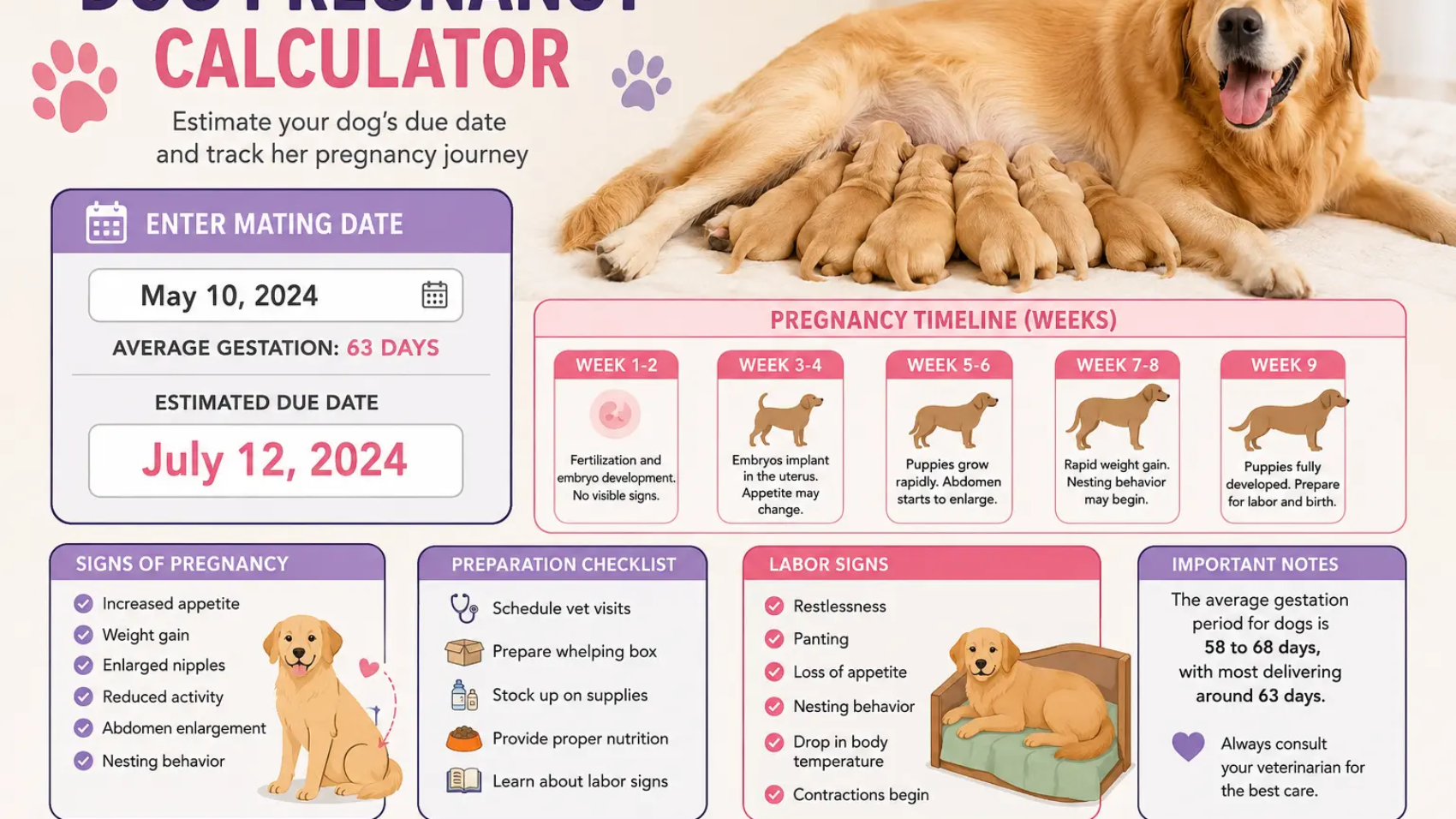
A dog pregnancy calculator is a simple tool that helps you estimate a dog’s due date after breeding. It uses the mating date to predict when puppies may arrive. Most dogs stay pregnant for about 58 to 68 days. Many healthy dogs give birth around day 63. This tool helps breeders and pet owners track the pregnancy timeline with ease.
Many people use a dog pregnancy calculator because it saves time and reduces guesswork. You only need the breeding date. Then the calculator provides important milestones during pregnancy. These milestones include embryo growth, body changes, and the expected whelping date. As a result, owners can prepare for the puppies in advance.
The dog pregnancy calculator is one of the best tools for tracking canine pregnancy. It gives useful estimates and helps you stay organized. While it does not replace veterinary care, it offers a simple way to follow the pregnancy journey from the first day to delivery.
What Is a Dog Pregnancy Calculator
A dog pregnancy calculator is an online or manual tool that estimates a dog’s due date. The tool works by counting the average gestation period from the breeding date. Most calculators use a standard range of 63 days. This method gives a close estimate for puppy arrival. The calculator also helps owners understand important stages of pregnancy.
Look, many first-time dog owners feel confused about what happens each week. The calculator breaks the process into smaller steps. This makes the journey easier to understand. Breeders often use these calculators to plan vet visits and prepare a safe whelping area. You know, proper planning can reduce stress for both the dog and the owner. The tool acts as a helpful guide throughout the pregnancy period.
How Dog Pregnancy Works
Dog pregnancy starts after successful mating and fertilization. The fertilized eggs travel into the uterus. Then the embryos begin to develop. During the first weeks, there are very few visible signs. As the weeks pass, the puppies grow rapidly. The mother’s body starts to change.
Her appetite may increase, and her abdomen becomes larger. These changes help owners recognize the progress of pregnancy. The gestation period for most dogs lasts around nine weeks. Trust me, every week brings important growth for the puppies. Proper nutrition and regular veterinary care support healthy development during this time.
Average Dog Gestation Period
The average gestation period for dogs is about 63 days. Normal pregnancies may range from 58 to 68 days. Several factors can affect the exact timing of birth. Breed size sometimes influences pregnancy length. Small breeds and large breeds may show slight differences.
Even so, most healthy dogs remain close to the average timeline. The dog pregnancy calculator uses this average period to predict a due date. Since every dog is unique, the estimate may vary by a few days. Therefore, owners should monitor the dog closely as the due date approaches.
Dog Pregnancy Timeline Overview
| Pregnancy Stage | Approximate Days |
| Mating Day | Day 0 |
| Fertilization | Day 2-5 |
| Embryo Development | Day 10-20 |
| Fetal Growth | Day 21-45 |
| Rapid Puppy Growth | Day 46-58 |
| Whelping Period | Day 58-68 |
Why Dog Owners Use a Pregnancy Calculator
Many owners use a dog pregnancy calculator because it provides clear estimates. It helps them understand what to expect throughout the pregnancy period. As a result, they can make better decisions for their pets. The calculator also helps schedule veterinary appointments.
Regular checkups are important during pregnancy. Early planning supports the health of both the mother and her puppies. Bro, preparation becomes much easier when you know the estimated due date. Owners can gather supplies, prepare a whelping box, and arrange support before labor begins.
Information Needed for a Dog Pregnancy Calculator
Most calculators require only one piece of information. You enter the breeding or mating date. Then the calculator estimates the expected delivery date. Some advanced calculators allow multiple breeding dates. This feature improves accuracy when mating occurs over several days.
It provides a broader prediction range for puppy arrival. Accurate dates help produce better results. Therefore, owners should record breeding information carefully. Good records support both planning and veterinary care.
Step-by-Step Guide to Using a Dog Pregnancy Calculator
Step 1: Record the Breeding Date
Write down the exact mating date. This information forms the foundation of the calculation. Without an accurate date, estimates become less reliable.
Step 2: Enter the Date
Open the calculator and enter the breeding date. The tool automatically counts forward using the average gestation period.
Step 3: Review the Estimated Due Date
The calculator displays an expected delivery date. It may also show weekly pregnancy milestones and puppy development stages.
Step 4: Monitor Pregnancy Progress
Track your dog’s health during each stage. Regular observations help you notice important changes and prepare for delivery.
Key Benefits of a Dog Pregnancy Calculator
A dog pregnancy calculator offers convenience and simplicity. Owners receive fast estimates without performing manual calculations. This saves time and reduces mistakes. The tool also improves organization. Users can plan feeding schedules, vet visits, and puppy care preparations.
Better planning often creates a smoother pregnancy experience. Like many useful pet care tools, a pregnancy calculator supports informed decisions. While it cannot predict the exact birth day, it provides valuable guidance throughout the process.
Signs of Pregnancy in Dogs
Early pregnancy signs can appear within a few weeks after breeding. Some dogs show reduced activity and mild appetite changes. Others may display very few symptoms. As pregnancy progresses, physical changes become easier to notice. Weight gain, enlarged nipples, and abdominal growth are common signs.
These changes usually become more visible during the middle weeks. Veterinary confirmation provides the most reliable results. Ultrasound examinations can detect pregnancy before obvious physical signs appear.
Common Pregnancy Signs
| Pregnancy Sign | Description |
| Increased Appetite | Dog eats more food |
| Weight Gain | Gradual body growth |
| Enlarged Nipples | More noticeable mammary glands |
| Reduced Activity | Less energy than normal |
| Nesting Behavior | Preparing a place for puppies |
| Abdomen Growth | Belly becomes larger |
Week-by-Week Dog Pregnancy Development
Weeks 1 to 2
During the first two weeks, fertilization and embryo formation occur. The embryos travel toward the uterus. Most dogs show no visible signs during this stage.
Weeks 3 to 4
Embryos attach to the uterine wall and continue development. Some dogs experience appetite changes. Veterinary ultrasound may confirm pregnancy during this period.
Weeks 5 to 6
Puppies grow rapidly. The mother’s abdomen becomes larger. Nutritional needs increase as fetal development continues.
Weeks 7 to 9
The puppies gain size and prepare for birth. Nesting behavior often begins. Owners should prepare for labor and monitor the dog closely.
Dog Pregnancy Stages Explained in Detail
Understanding each pregnancy stage helps owners provide better care. Every stage brings new changes in the mother’s body and the growing puppies. A dog pregnancy calculator helps track these important milestones. During the first stage, fertilized eggs move into the uterus.
Then they attach to the uterine lining and begin development. This stage often passes without visible signs. Many owners do not notice pregnancy right away. The middle stage focuses on rapid puppy growth. Organs, bones, and body systems continue to develop. At this point, the mother’s nutritional needs increase.
Good food supports healthy puppy development. The final stage prepares both the mother and puppies for birth. The abdomen becomes larger, and nesting behavior often begins. Careful monitoring becomes important during these last weeks.
Factors That Affect the Due Date
Most dogs deliver puppies near the average gestation period. Several factors can influence the exact birth date. Because of this, the calculator provides an estimate rather than a guarantee. Breed size can affect pregnancy timing. Some small breeds may deliver slightly earlier. Meanwhile, larger breeds sometimes carry puppies a little longer.
The difference is usually small. The number of puppies may also influence delivery timing. Large litters sometimes lead to earlier births. Smaller litters may result in slightly longer pregnancies. Health conditions can affect pregnancy length as well. Regular veterinary care helps identify any concerns. Therefore, owners should combine calculator estimates with professional guidance.
Dog Nutrition During Pregnancy
Proper nutrition plays a major role in healthy pregnancies. The mother needs quality food to support her body and the growing puppies. Balanced nutrition improves overall health during this period. During the first few weeks, food intake often remains normal. Then calorie needs increase as the puppies grow. Owners should gradually adjust feeding amounts when recommended by a veterinarian.
Protein supports muscle and tissue development. Healthy fats provide energy and help puppy growth. Vitamins and minerals support many important body functions. Fresh water should remain available at all times. Hydration supports both the mother and her developing puppies. Consistent access to clean water is essential throughout pregnancy.
Important Nutrients for Pregnant Dogs
| Nutrient | Benefit |
| Protein | Supports puppy growth |
| Healthy Fats | Provides energy |
| Calcium | Helps bone development |
| Phosphorus | Supports skeletal health |
| Vitamins | Supports body functions |
| Water | Maintains hydration |
Feeding Schedule During Pregnancy
Feeding needs change as pregnancy progresses. Owners should adjust meals based on growth stages. This approach helps maintain healthy weight and energy levels. During the early weeks, many dogs continue their regular feeding schedule. Appetite changes may occur, but major increases are uncommon at first.
The middle weeks often require additional calories. Puppies grow faster during this period. Therefore, the mother needs more nutrients and energy. Near the final weeks, smaller meals often work best. The growing puppies take up more abdominal space. Smaller portions help maintain comfort while supporting nutritional needs.
Exercise and Physical Activity
Regular exercise helps maintain overall health during pregnancy. Light activity supports muscle tone and healthy circulation. However, exercise should remain safe and controlled. Short walks work well for most pregnant dogs. These walks provide movement without excessive strain. Consistent activity often supports physical comfort. As pregnancy advances, energy levels may decrease.
Owners should observe their dog’s behavior carefully. Rest becomes more important during the final weeks. Avoid intense exercise and rough play. Excessive physical stress can create unnecessary risks. Gentle movement remains the safest option throughout pregnancy.
Veterinary Care During Pregnancy
Veterinary care helps ensure a healthy pregnancy. Regular examinations allow professionals to monitor development and address concerns early. An ultrasound can confirm pregnancy during the early weeks. This test helps identify developing puppies and assess overall progress. Many breeders schedule this examination after breeding.
Checkups may occur throughout pregnancy. Veterinarians monitor weight, health, and puppy development. These visits provide valuable information for owners. Professional guidance remains important even when using a dog pregnancy calculator. The calculator offers estimates, while veterinary care provides medical evaluation and support.
Ultrasound and Pregnancy Confirmation
Ultrasound serves as one of the most common pregnancy confirmation methods. It allows veterinarians to visualize developing puppies inside the uterus. This procedure often takes place around the fourth week of pregnancy. Early confirmation helps owners prepare for upcoming care needs. It also reduces uncertainty after breeding.
Ultrasound examinations provide useful information about development. Veterinarians can assess growth and monitor overall pregnancy progress. While ultrasound confirms pregnancy, it may not always provide an exact puppy count. Additional methods may help estimate litter size later in pregnancy.
Preparing a Whelping Box
A whelping box provides a safe space for delivery and newborn care. Preparation should begin before labor starts. Early setup allows the mother to become comfortable with the area. The box should offer enough space for movement. At the same time, it should help protect newborn puppies.
Comfortable bedding improves warmth and support. Choose a quiet location inside the home. Reduced noise helps create a calm environment. Many dogs prefer private areas during the final weeks. Cleanliness remains important throughout the process. Regular maintenance helps support the health of both the mother and puppies.
Basic Whelping Box Supplies
| Item | Purpose |
| Whelping Box | Safe delivery area |
| Clean Bedding | Comfort and warmth |
| Towels | Cleaning puppies |
| Water Bowl | Hydration |
| Heating Source | Warm environment |
| Disposable Pads | Easy cleanup |
Signs That Labor Is Approaching
Several signs indicate that labor may begin soon. Owners should monitor these changes carefully during the final days of pregnancy. Nesting behavior often appears first. The mother may arrange bedding or search for a comfortable location. This behavior helps prepare for delivery. Appetite often decreases shortly before labor begins.
Some dogs eat less food during the final day. This change commonly occurs before puppy arrival. Restlessness may increase as labor approaches. The mother may pace, change positions, or seek attention. These behaviors often signal that delivery is near.
The First Stage of Labor
The first labor stage focuses on preparation. The cervix begins to open while contractions develop. This stage may last several hours. Many dogs appear restless during this period. They may pant, move around frequently, or spend time in their nesting area. These behaviors are common before active delivery.
Owners should provide a calm environment. Stress reduction helps support the labor process. Quiet observation often works best during this stage. Veterinary assistance may become necessary if unusual symptoms occur. Professional advice helps address concerns quickly.
The Second Stage of Labor
The second stage involves puppy delivery. Stronger contractions help move puppies through the birth canal. This stage represents active labor. Each puppy typically arrives within a reasonable time after contractions begin. Delivery intervals vary among dogs.
Some variation remains normal. Owners should monitor progress closely. However, unnecessary interference should be avoided. Most healthy dogs manage delivery naturally. Veterinary attention may be needed if complications arise. Immediate guidance helps protect both the mother and puppies.
The Third Stage of Labor
The third stage involves the delivery of placentas. This process usually follows the birth of each puppy. The mother’s body continues important recovery steps during this stage. Owners should monitor the overall process carefully. Attention to detail helps identify any unusual concerns. Good observation supports timely veterinary care if needed.
The mother often focuses on cleaning and caring for her puppies. This behavior helps strengthen bonding and supports newborn survival. Once labor ends, the recovery period begins. The mother needs rest, nutrition, and ongoing monitoring as she adjusts to caring for her litter.
Common Mistakes to Avoid During Dog Pregnancy
Some owners make changes too quickly during pregnancy. Sudden diet adjustments can create digestive issues. Gradual changes often work better. Skipping veterinary care is another common mistake. Professional monitoring helps identify concerns before they become serious. Regular checkups provide valuable support.
Overfeeding can also create problems. While nutritional needs increase, excessive weight gain may affect comfort and health. Balanced feeding remains important. Ignoring signs of labor can cause unnecessary stress. Preparation helps owners respond appropriately when delivery approaches. Careful planning supports a smoother experience.
How a Dog Pregnancy Calculator Helps Breeders
Breeders often manage multiple responsibilities during pregnancy. A calculator helps organize important dates and milestones. Better planning improves overall management. The estimated due date supports scheduling decisions. Breeders can prepare supplies, arrange assistance, and monitor progress more effectively.
The calculator also supports record keeping. Accurate records help track breeding information and pregnancy outcomes over time. While no tool can predict every detail, a dog pregnancy calculator remains a valuable resource. It combines convenience with useful planning support throughout the pregnancy journey.
Puppy Care After Birth
Newborn puppies need warmth, nutrition, and protection. During the first days, they depend completely on their mother. Therefore, owners should provide a clean and safe environment. Healthy puppies usually nurse soon after birth. Mother’s milk contains important nutrients that support growth and immunity.
Frequent feeding helps puppies gain strength during the first weeks. Daily observation is important. Owners should watch for steady weight gain and normal activity. Early attention helps identify potential concerns before they become serious.
Mother Dog Recovery After Delivery
The recovery period starts immediately after labor ends. The mother needs rest, fresh water, and nutritious food. Proper care supports healing and milk production. Many dogs spend most of their time with their puppies. This behavior helps protect and nurture the litter.
Owners should allow quiet bonding time whenever possible. Regular monitoring remains important during recovery. Changes in appetite, energy, or behavior may require veterinary attention. Early care supports long-term health for both mother and puppies.
Newborn Puppy Development Timeline
Puppies grow quickly during the first few weeks of life. Each stage brings important physical and behavioral changes. Understanding these stages helps owners provide appropriate care. During the first week, puppies sleep and nurse most of the time. Their eyes and ears remain closed. Growth occurs rapidly during this period.
By the second and third weeks, sensory development begins. Puppies gradually open their eyes and become more active. Movement and awareness improve each day. The following weeks focus on learning and social development. Puppies begin exploring their surroundings and interacting with littermates. These experiences support healthy growth.
Puppy Development Stages
| Age | Development Milestone |
| 0-1 Week | Nursing and sleeping |
| 2 Weeks | Eyes begin opening |
| 3 Weeks | Increased movement |
| 4 Weeks | Early social behavior |
| 5-6 Weeks | More exploration |
| 7-8 Weeks | Stronger coordination |
Health Concerns During Dog Pregnancy
Most pregnancies progress normally. However, owners should remain aware of possible complications. Early recognition often improves outcomes. Loss of appetite for an extended period may require attention. Significant lethargy or unusual behavior can also signal concerns. Professional guidance helps determine the cause.
Abnormal discharge may indicate a problem. Owners should contact a veterinarian if unusual symptoms appear. Quick action supports the health of the mother and puppies. Routine veterinary care remains one of the best ways to manage risks. Regular monitoring helps identify concerns before they become severe.
Warning Signs That Need Veterinary Care
Certain symptoms require immediate attention. Understanding these signs helps owners respond quickly when needed. Severe weakness, heavy bleeding, or prolonged labor may indicate complications. These situations often require professional evaluation. Prompt care helps protect both mother and puppies.
High fever can also signal health concerns. Changes in breathing or extreme discomfort should never be ignored. Veterinary guidance provides the safest course of action. Owners should keep emergency contact information available before the due date. Preparation supports faster response during urgent situations.
Dog Pregnancy Calculator vs Manual Calculation
A dog pregnancy calculator simplifies the estimation process. Users enter the breeding date and receive a projected due date within seconds. Manual calculations require counting days on a calendar. While this method works, it increases the chance of mistakes.
Small errors can affect planning. The calculator also provides pregnancy milestones. These milestones help owners track important stages of development. As a result, planning becomes more organized. Many breeders prefer calculators because they save time and improve convenience. The tool offers a simple solution for pregnancy tracking.
Benefits of Tracking Pregnancy Milestones
Tracking milestones helps owners understand what happens during each stage. Better knowledge often leads to better preparation. Milestones support scheduling decisions. Owners can plan veterinary visits and gather supplies before labor begins.
Organization reduces stress during the final weeks. Growth tracking also helps identify unusual changes. Consistent observation supports early intervention when concerns arise. A dog pregnancy calculator makes milestone tracking easier. It presents information in a simple and accessible format.
Best Practices for a Healthy Dog Pregnancy
Healthy pregnancies begin with responsible breeding practices. Good preparation supports both the mother and future puppies. Balanced nutrition remains important throughout pregnancy. Quality food provides the nutrients needed for growth and development.
Regular veterinary care supports ongoing health monitoring. Professional guidance helps owners make informed decisions during each stage. A safe environment also contributes to positive outcomes. Clean living spaces, gentle exercise, and reduced stress support overall well-being.
Common Myths About Dog Pregnancy
Many myths create confusion for dog owners. Accurate information helps prevent misunderstandings during pregnancy. Some people believe every dog delivers exactly on day 63. In reality, healthy pregnancies may vary within a normal range. Flexibility remains important.
Another myth suggests that larger dogs always have longer pregnancies. Breed size may influence timing slightly, but individual differences matter as well. Reliable veterinary advice remains the best source of information. Evidence-based care supports healthy decisions throughout pregnancy.
Dog Pregnancy Calculator and Breeding Records
Accurate records improve pregnancy management. Breeders often document mating dates, health information, and veterinary visits. Good records help improve future planning. Historical data allows breeders to compare pregnancy timelines and outcomes.
A dog pregnancy calculator works best when paired with accurate information. Detailed records improve estimate accuracy and organization. Long-term documentation also supports responsible breeding practices. Consistent record keeping benefits both breeders and dogs.
FAQ’s
A dog pregnancy calculator provides a close estimate based on the breeding date. Most calculators use the average gestation period of about 63 days. Actual delivery may vary by several days.
Yes. Most dog breeds can use the calculator. The tool works with standard canine gestation periods and provides useful due date estimates.
Veterinary visits should begin soon after breeding confirmation. Regular checkups throughout pregnancy help monitor health and puppy development.
The normal gestation period ranges from 58 to 68 days. Many dogs give birth near day 63, though some variation remains normal.
No. The calculator serves as a planning tool. Veterinary care remains essential for monitoring health and managing potential complications.
Conclusion
A dog pregnancy calculator helps owners estimate important pregnancy dates with ease. By using the breeding date, the tool predicts a likely due date and provides useful milestones throughout the gestation period. This information supports better planning and preparation.
Proper care remains important during every stage of pregnancy. Balanced nutrition, routine veterinary visits, and a safe environment support healthy development. These factors work together to improve outcomes for both the mother and her puppies.
The dog pregnancy calculator stands as a valuable resource for breeders and pet owners alike. It offers convenience, organization, and helpful guidance during the pregnancy journey. When combined with professional veterinary care, it supports a safer and more informed experience from breeding to puppy birth.
Leave Your Comment