
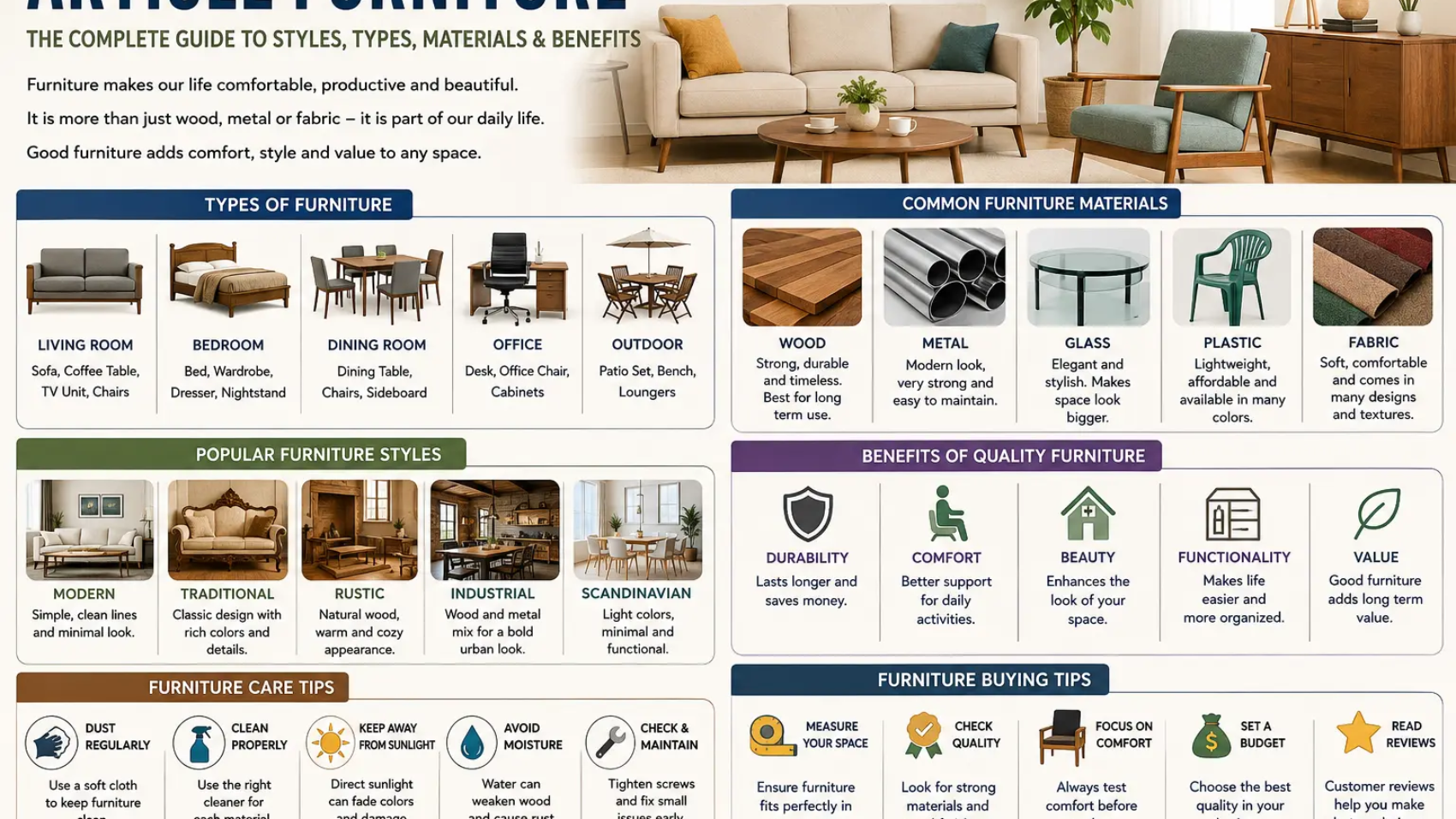
Furniture plays a big role in every home, office, and public space. It helps people sit, sleep, work, eat, and store items. Good furniture also adds beauty and comfort to a room. Today, people choose furniture based on style, function, and budget. As a result, the furniture industry continues to grow across the world. The term furniture refers to movable items that support daily activities. These items include chairs, tables, beds, sofas, cabinets, and desks. Different materials create different looks and levels of durability. Wood, metal, glass, and plastic remain common choices. Each material serves a unique purpose.
Modern buyers look for furniture that offers comfort and value. They also want products that match their lifestyle. For example, small homes often need space-saving furniture. Large homes may focus more on design and luxury. Therefore, furniture choices vary from one person to another. The best article furniture combines comfort, durability, beauty, and function. It helps create an organized space while improving daily life. Trust me, the right furniture can change the feel of a room and make it more useful.
Understanding Furniture and Its Purpose
Furniture supports many daily tasks. People use it for sitting, sleeping, eating, studying, and working. Without article furniture, homes and workplaces would feel incomplete. Every piece serves a specific purpose and adds convenience to life. Furniture also helps organize a space. Cabinets, shelves, and drawers store important items. As a result, rooms stay neat and easy to use. A well-organized space often feels more comfortable and welcoming.
Many furniture pieces improve comfort. Sofas provide relaxation after a busy day. Beds support healthy sleep. Desks create a good work environment. Therefore, furniture affects both physical comfort and productivity. Good furniture also enhances room appearance. Beautiful designs create a pleasant atmosphere. Look, a simple table or chair can become a decorative feature when chosen carefully.
History of Furniture
Furniture has existed for thousands of years. Ancient civilizations created simple furniture from wood and stone. These early designs focused on basic needs rather than decoration. Even then, furniture played an important role in daily life. Ancient Egyptians made beds, chairs, and storage boxes. Many pieces included detailed carvings and decorations. Wealthy families often owned furniture made from rare materials. This showed status and social position.
During the Middle Ages, furniture became stronger and larger. Craftsmen used solid wood and handmade techniques. As skills improved, furniture designs became more attractive and practical. Modern furniture combines traditional craftsmanship with advanced technology. Manufacturers now produce furniture in large quantities. As a result, people have more choices than ever before.
Main Types of Furniture
Article furniture comes in many forms. Each type serves a different purpose. Understanding these categories helps buyers make better decisions when furnishing a space.
Living Room Furniture
Living room furniture creates a comfortable gathering area. Sofas, coffee tables, recliners, and entertainment units belong in this category. These items support relaxation and social activities. Many families spend significant time in the living room. Therefore, comfort remains a key factor. Soft seating and durable materials often provide the best experience.
Bedroom Furniture
Bedroom furniture focuses on rest and storage. Beds, wardrobes, dressers, and nightstands are common examples. These items help create a peaceful sleeping environment. A quality bed improves sleep quality. Storage furniture also keeps clothing and personal items organized. As a result, bedrooms remain clean and comfortable.
Dining Room Furniture
Dining furniture supports meals and family gatherings. Tables and chairs form the center of this space. Some dining rooms also include cabinets and display units. Strong materials work well for dining furniture because of frequent use. Easy maintenance also helps preserve appearance over time.
Office Furniture
Office furniture supports work and study activities. Desks, office chairs, filing cabinets, and meeting tables belong in this category. Ergonomic designs improve comfort during long working hours. Many people now work from home. Therefore, office furniture has become more important than ever. Proper article furniture can improve focus and productivity.
Common Furniture Materials
Different materials affect furniture quality, appearance, and lifespan. Buyers should understand material options before making a purchase.
Wood Furniture
Wood remains one of the most popular article furniture materials. It offers strength, beauty, and durability. Oak, walnut, maple, and pine are common wood types. Solid wood furniture often lasts many years. It can also be repaired and refinished. Therefore, many people consider it a long-term investment.
Metal Furniture
Metal furniture provides strength and modern style. Steel and aluminum remain popular choices. These materials resist damage and support heavy weight. Metal furniture works well in offices, outdoor spaces, and industrial designs. It often requires minimal maintenance.
Glass Furniture
Glass furniture creates a clean and elegant appearance. Coffee tables and dining tables frequently use glass surfaces. These pieces help rooms feel larger and brighter. Glass requires careful handling. Regular cleaning also keeps it looking attractive.
Plastic Furniture
Plastic furniture offers affordability and flexibility. It comes in many colors and designs. Many outdoor furniture products use high-quality plastic materials. Plastic furniture is lightweight and easy to move. Therefore, it suits temporary and casual spaces.
Furniture Material Comparison
| Material | Durability | Appearance | Maintenance | Cost |
| Wood | High | Classic | Medium | Medium to High |
| Metal | High | Modern | Low | Medium |
| Glass | Medium | Elegant | High | Medium |
| Plastic | Medium | Casual | Low | Low |
Benefits of Quality Furniture
The best article furniture combines comfort, durability, beauty, and function. Quality furniture provides long-term value. Strong construction reduces repair and replacement costs. As a result, buyers save money over time. Comfort represents another major benefit. Well-designed furniture supports the body and improves daily activities. This can improve both health and relaxation.
Quality furniture also increases visual appeal. Attractive furniture creates a welcoming environment for family members and guests. Therefore, it contributes to overall home satisfaction. Many high-quality pieces maintain their value for years. Some article furniture even becomes more desirable with age. Like fine craftsmanship, lasting quality often stands the test of time.
Furniture for Small Spaces
Small homes require smart furniture choices. Space-saving designs help maximize available room. Multi-purpose furniture often provides the best solution. Sofa beds combine seating and sleeping functions. Folding tables save space when not in use. Storage beds also provide extra room for personal belongings.
Light-colored furniture can make a room appear larger. Simple designs reduce visual clutter. Therefore, small spaces often feel more open and comfortable. Bro, careful planning matters in compact homes. Every furniture piece should serve a clear purpose while maintaining comfort and style.
Furniture Selection Guide
| Room | Recommended Furniture | Main Purpose |
| Living Room | Sofa, Coffee Table, TV Unit | Relaxation |
| Bedroom | Bed, Wardrobe, Nightstand | Rest and Storage |
| Dining Room | Dining Table, Chairs | Meals |
| Office | Desk, Office Chair | Work and Study |
| Outdoor Area | Patio Set, Bench | Recreation |
Choosing the Right Furniture
Choosing furniture starts with understanding needs. Buyers should consider room size, budget, and intended use. These factors help narrow available options. Measurements remain important before purchase. Furniture should fit comfortably within a room. Adequate walking space also improves functionality.
Style preferences influence article furniture selection. Some people prefer modern designs. Others enjoy traditional or rustic looks. Therefore, personal taste plays a major role. Durability should never be ignored. Strong materials and quality construction often provide better long-term value. Trust me, a durable piece usually proves more cost-effective than a cheap replacement.
Modern Furniture Styles
Modern furniture styles help create a clean and attractive living space. These styles focus on comfort, simplicity, and function. Many homeowners choose modern furniture because it fits different room sizes. As a result, modern designs remain popular around the world. Contemporary furniture uses smooth lines and simple shapes. It avoids excessive decoration and focuses on practical use. Many contemporary pieces use metal, glass, and engineered wood. Therefore, they create a fresh and organized appearance.
Traditional furniture offers a classic look. It often includes detailed craftsmanship and rich wood finishes. Many people choose traditional furniture because it creates a warm atmosphere. It also works well in formal living spaces. Rustic furniture brings a natural feeling into a room. Wood textures and earthy colors define this style. Look, rustic article furniture often creates a cozy environment that many families enjoy.
Popular Furniture Styles Comparison
| Style | Main Features | Best For |
| Modern | Simple lines, clean look | Apartments, offices |
| Traditional | Detailed design, rich wood | Large homes |
| Rustic | Natural wood, warm feel | Cozy interiors |
| Industrial | Metal and wood mix | Urban spaces |
| Scandinavian | Light colors, minimal design | Small rooms |
Sustainable Furniture
Sustainable furniture supports environmental protection. Manufacturers use eco-friendly materials and responsible production methods. As a result, furniture waste decreases and natural resources last longer. Many companies now use recycled materials. Reclaimed wood and recycled metal reduce the need for new raw materials. Therefore, sustainable furniture helps lower environmental impact.
Certified wood products also support responsible forestry. These products come from forests managed for long-term health and growth. Buyers often prefer these options because they support sustainability goals. Sustainable article furniture often lasts longer due to quality construction. A durable product reduces replacement needs. This creates benefits for both consumers and the environment.
Outdoor Furniture
Outdoor furniture creates comfortable spaces for relaxation and entertainment. Patios, gardens, balconies, and decks often use special furniture designed for weather resistance. Many outdoor furniture products use aluminum, teak wood, resin, and synthetic wicker. These materials resist moisture and sunlight. Therefore, they maintain their appearance longer.
Comfort remains important for outdoor furniture. Cushioned seating and ergonomic designs improve relaxation. Many homeowners create outdoor living spaces that feel similar to indoor rooms. Regular maintenance extends outdoor furniture life. Cleaning surfaces and covering furniture during severe weather helps protect the investment.
Furniture Maintenance and Care
Furniture maintenance preserves appearance and durability. Simple care routines help furniture remain attractive for many years. As a result, owners receive greater value from their purchases. Wood furniture benefits from regular dusting. Soft cloths help remove dirt without causing scratches. Protective products may also help maintain wood finishes.
Fabric furniture requires periodic cleaning. Vacuuming removes dust and debris. Prompt stain treatment prevents permanent damage and keeps furniture fresh. Metal furniture needs basic cleaning and rust prevention. Glass surfaces require careful cleaning to maintain clarity. Therefore, proper maintenance varies by material type.
Essential Furniture Care Tips
| Furniture Type | Basic Care Method | Cleaning Frequency |
| Wood | Dust and polish | Weekly |
| Fabric | Vacuum and spot clean | Weekly |
| Metal | Wipe and inspect | Monthly |
| Glass | Glass cleaner | Weekly |
| Outdoor Furniture | Wash and cover | Monthly |
Smart Furniture Technology
Smart furniture combines traditional design with modern technology. Many products now include charging ports, lighting systems, and adjustable features. Therefore, furniture serves more functions than before. Smart desks support remote work and productivity. Adjustable height settings help users switch between sitting and standing positions.
This promotes comfort during long work sessions. Modern beds may include sleep tracking features. Some products also offer temperature control and adjustable support settings. As a result, users enjoy a personalized experience. Technology continues to shape furniture design. Manufacturers focus on convenience while maintaining comfort and style.
Custom Furniture Solutions
Custom furniture allows buyers to create unique pieces that match their needs. Customers choose dimensions, materials, colors, and design details. Therefore, custom furniture provides a personalized solution. Many homeowners choose custom furniture for unusual room layouts. Standard products may not fit specific spaces.
Custom designs solve this problem effectively. Businesses also use custom furniture. Offices often require specialized desks, storage systems, and meeting tables. These products improve workplace efficiency and appearance. Although custom furniture may cost more, it often provides greater satisfaction because it matches exact requirements.
Furniture for Home Offices
Home office furniture has become increasingly important. Remote work creates demand for functional and comfortable workspaces. Good furniture supports productivity and organization. A quality desk forms the foundation of a home office. It should provide enough workspace for daily tasks. Proper dimensions improve comfort and efficiency.
Ergonomic chairs support healthy posture. Adjustable features help users maintain comfort during long periods of sitting. Therefore, chair quality deserves careful attention. Storage furniture also improves organization. Shelves, cabinets, and filing systems reduce clutter and support workflow management.
Furniture Buying Tips
Furniture buying requires careful planning. Buyers should identify needs before visiting stores or browsing online options. This approach prevents unnecessary purchases. Budget planning helps narrow available choices. Consumers should balance quality, comfort, and affordability. A realistic budget often leads to better decisions.
Product reviews provide useful information. Previous customer experiences may reveal strengths and weaknesses. Therefore, research supports informed purchasing decisions. Comparing multiple options also helps buyers find the best value. Like many major purchases, furniture deserves careful evaluation before making a final choice.
Online Furniture Shopping
Online furniture shopping offers convenience and variety. Consumers can compare products from multiple retailers without leaving home. As a result, online sales continue to grow. Product descriptions help buyers understand dimensions, materials, and features. Clear information reduces confusion during the shopping process.
Customer reviews provide valuable feedback. These reviews often highlight comfort, durability, and assembly experiences. Therefore, they support purchasing decisions. Buyers should verify return policies before ordering. Flexible return options provide protection if a product does not meet expectations.
Furniture Safety Considerations
Furniture safety protects users from accidents and injuries. Manufacturers often follow safety standards during design and production. Therefore, consumers should pay attention to safety features. Stable furniture reduces tipping risks. Bookshelves, cabinets, and dressers may require wall anchoring in homes with children.
This precaution improves household safety. Furniture edges also deserve attention. Rounded corners reduce injury risks in active environments. Many family-friendly products include these safety features. Quality construction supports safe daily use. Strong joints and durable materials help furniture perform reliably over time.
Furniture Industry Trends
Furniture trends continue to evolve. Designers respond to changing lifestyles, technology, and consumer preferences. As a result, new styles appear regularly. Minimalist furniture remains popular. Clean designs and functional features appeal to many homeowners. These products help create organized living spaces. Multi-functional furniture also continues to grow.
Consumers value products that save space and perform multiple tasks. Manufacturers develop innovative solutions. Eco-friendly furniture remains a major trend. Buyers increasingly seek sustainable materials and responsible production practices. This trend supports environmental awareness across the industry.
Luxury Furniture
Luxury furniture represents high-quality craftsmanship and premium materials. The best article furniture combines comfort, durability, beauty, and function. These products often use solid wood, genuine leather, natural stone, and custom finishes. As a result, luxury furniture creates an elegant and refined environment. Many luxury pieces feature detailed craftsmanship. Skilled artisans spend significant time creating unique designs. Each item often reflects exceptional attention to detail.
Luxury furniture focuses on both beauty and durability. Manufacturers use strong materials that maintain quality for many years. This combination makes luxury furniture attractive to homeowners seeking long-term value. Although luxury furniture requires a larger investment, many buyers appreciate its durability, comfort, and timeless appearance.
Commercial Furniture
Commercial furniture serves businesses, schools, hotels, restaurants, and public spaces. These environments require furniture that can withstand heavy daily use. Durability becomes a top priority. Office furniture remains one of the largest commercial categories. Desks, chairs, conference tables, and storage systems support workplace activities. Good office furniture helps improve comfort and efficiency.
Restaurant furniture focuses on customer experience. Comfortable seating and durable tables contribute to a pleasant dining environment. As a result, furniture plays a role in customer satisfaction. Hotel furniture combines comfort, style, and durability. Guests expect attractive furnishings that create a welcoming atmosphere during their stay.
Furniture Manufacturing Process
Furniture manufacturing involves several important stages. Each stage contributes to the quality and appearance of the final product. Careful production methods remain essential. The process begins with material selection. Manufacturers choose wood, metal, glass, fabric, or other materials based on design requirements. High-quality materials support better performance and durability.
Next comes cutting, shaping, and assembly. Modern machinery improves precision while skilled workers handle detailed tasks. This combination supports consistent product quality. The final stage includes finishing and inspection. Surfaces receive paint, stain, or protective coatings. Quality checks ensure furniture meets company standards before reaching customers.
Furniture Manufacturing Stages
| Stage | Purpose | Result |
| Material Selection | Choose raw materials | Strong foundation |
| Cutting and Shaping | Create components | Accurate parts |
| Assembly | Join components | Complete structure |
| Finishing | Improve appearance | Attractive surface |
| Quality Inspection | Verify standards | Reliable product |
Furniture as a Long-Term Investment
Many furniture purchases provide long-term value. Durable products often remain useful for many years. As a result, buyers spend less on replacements and repairs. Solid wood furniture frequently serves multiple generations. Strong construction helps maintain functionality despite regular use. Many families consider quality furniture a worthwhile investment.
Timeless designs also support long-term value. Furniture that avoids short-term trends often remains attractive for decades. This helps preserve both usefulness and appearance. Well-maintained furniture may even increase in value. Antique and collectible pieces sometimes become highly desirable among collectors and enthusiasts.
The Future of Furniture
The best article furniture combines comfort, durability, beauty, and function. The furniture industry continues to evolve. New materials, technologies, and design approaches shape future products. Therefore, consumers can expect more innovation in coming years. Smart furniture will likely become more common. Integrated technology may improve convenience, comfort, and productivity. Many future products will combine digital features with traditional furniture functions.
Sustainability will remain a major focus. Manufacturers continue exploring recycled materials and environmentally responsible production methods. As a result, eco-friendly furniture options should increase. Customization may also expand. Advanced manufacturing technologies allow companies to create personalized furniture more efficiently. This gives consumers greater control over design choices.
Benefits of Investing in Quality Furniture
| Benefit | Description |
| Durability | Longer product lifespan |
| Comfort | Better daily experience |
| Appearance | Improved room design |
| Functionality | Greater usability |
| Value | Lower replacement costs |
| Sustainability | Reduced waste over time |
Furniture and Interior Design
Furniture plays a central role in interior design. It influences room layout, visual balance, and overall atmosphere. Therefore, furniture selection affects both function and appearance. Designers often begin with major furniture pieces. Sofas, beds, tables, and storage units establish the room structure. Smaller decorative items then complement these pieces.
Color coordination also matters. Furniture colors should work well with walls, flooring, and accessories. This creates a unified and attractive environment. Good interior design balances beauty and practicality. Furniture helps achieve this balance by supporting daily activities while enhancing visual appeal.
Common Furniture Buying Mistakes
Many buyers make avoidable furniture mistakes. Understanding these errors can help improve purchasing decisions. One common mistake involves ignoring room measurements. Furniture that appears suitable in a store may not fit properly at home. Therefore, accurate measurements remain essential. Some buyers focus only on appearance.
While style matters, comfort and durability deserve equal attention. The best article furniture combines comfort, durability, beauty, and function. Functional furniture often provides greater satisfaction over time. Another mistake involves choosing low-quality products solely because of price. Trust me, replacing poor furniture frequently may cost more in the long run. Proper research helps consumers avoid these problems and make better investments.
How Furniture Improves Daily Life
Furniture supports comfort, organization, and productivity. Every room depends on furniture to serve its intended purpose. As a result, furniture directly affects daily experiences. Comfortable seating encourages relaxation. Supportive beds improve sleep quality. Functional desks help create productive work environments.
Storage furniture reduces clutter and keeps belongings organized. This creates cleaner and more efficient living spaces. Therefore, furniture contributes to household organization. Look, quality furniture often improves both comfort and convenience. Small improvements in daily life can create long-term benefits for families and individuals.
FAQ‘s
Furniture includes movable items used for sitting, sleeping, working, eating, and storage. Common examples include chairs, tables, beds, sofas, and cabinets.
Solid wood is often considered one of the best materials because it offers durability, strength, and long-term value. However, the best choice depends on budget and needs.
Quality furniture can last many years. Solid wood furniture often remains useful for decades when maintained properly.
Ergonomic furniture supports proper posture and comfort. It helps reduce physical strain during work, study, and daily activities.
Custom furniture can be worth the investment because it matches specific needs, room sizes, and design preferences. Many buyers value its personalized features.
Conclusion
Furniture remains an essential part of modern life. It supports daily activities while improving comfort, organization, and appearance. From homes to offices, furniture helps create functional and welcoming spaces. Quality products often provide long-lasting value and reliability.
The furniture industry continues to evolve through new designs, materials, and technologies. Sustainable production, smart features, and customization shape many current trends. As a result, consumers enjoy more options than ever before. These developments help furniture meet changing lifestyle needs.
Choosing the right furniture requires careful planning and research. Buyers should consider comfort, durability, function, style, and budget before making decisions. The best article furniture creates attractive spaces, improves daily living, and delivers long-term value. With proper selection and maintenance, furniture can serve families and businesses for many years.
Leave Your Comment