
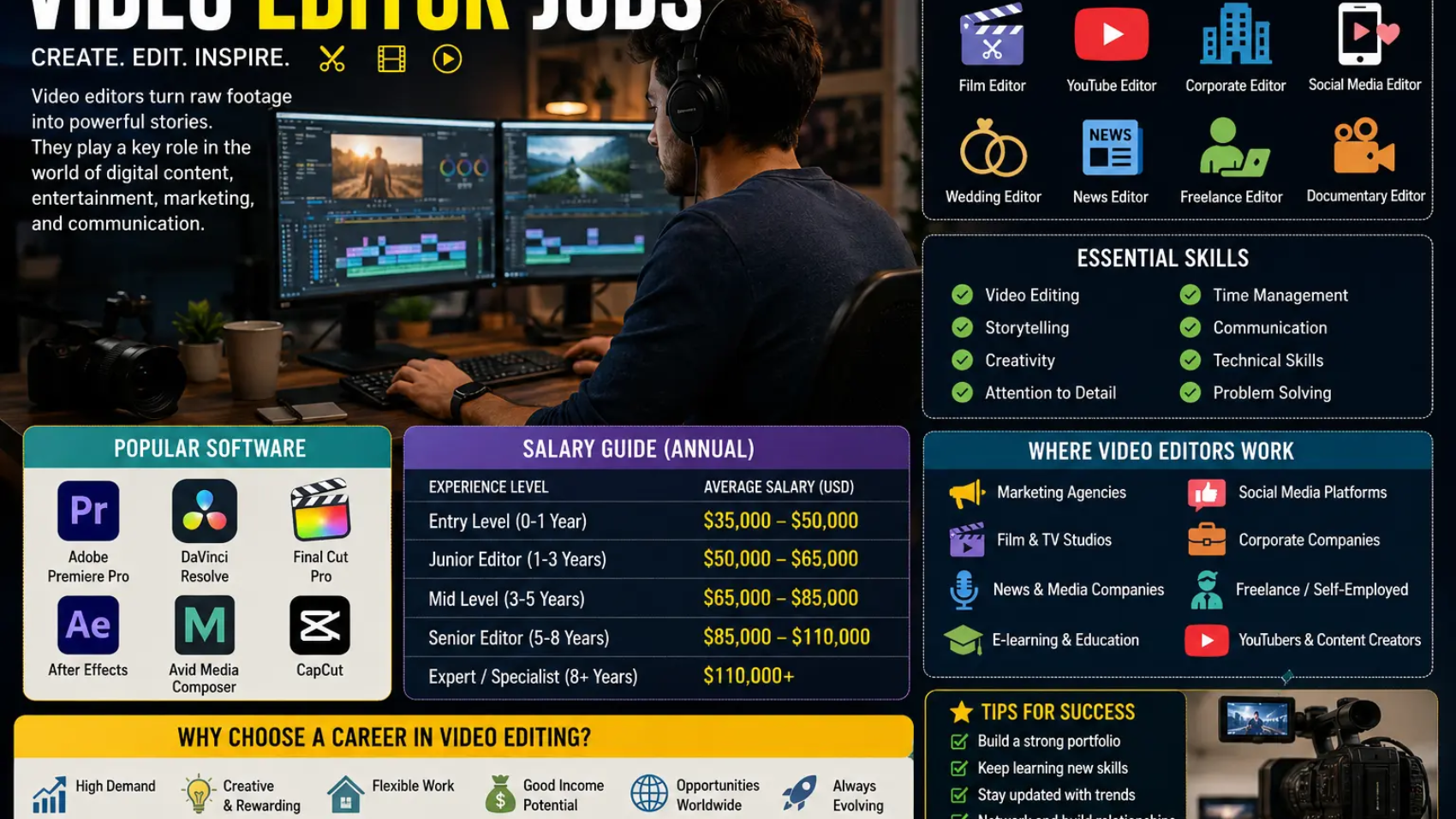
Video editor jobs play a key role in the media world. A video editor takes raw clips and turns them into a finished video. They cut scenes, add sound, place effects, and improve visual quality. Today, many businesses, creators, and brands need video content. As a result, the demand for skilled editors continues to grow.
The field offers many career paths. Some editors work for companies. Others work as freelancers. Many also work with content creators, marketing teams, and film studios. Because video content appears on many platforms, editors can find opportunities in different industries.
Video editor jobs are among the most valuable creative careers in the digital age. The role combines technical skills and creative thinking. Therefore, people who enjoy storytelling and technology often find this career rewarding.
What Are Video Editor Jobs
Video editor jobs involve creating polished videos from recorded footage. Editors organize clips and build a clear story. They also improve the viewing experience through careful editing. The job requires attention to detail. Editors remove mistakes, adjust timing, and improve transitions. They make sure every scene supports the final goal of the project.
As a result, viewers receive a smooth and engaging experience. Many industries use video editors. Companies need promotional videos. Schools use educational content. Social media creators publish videos daily. Therefore, skilled editors remain important across many sectors.
Why Video Editors Are Important
Video content influences how people learn and communicate. Because of this, editors help shape the message behind each video. They ensure that information appears clear and professional. Editors also improve audience engagement. Good editing keeps viewers interested from start to finish.
Strong pacing and visual flow create a better viewing experience. Therefore, businesses often invest in experienced editors. Modern marketing depends heavily on video. Brands use videos for product launches, training, and advertising. As a result, video editors support business growth and communication goals.
Growth of the Video Editing Industry
The video industry continues to expand. Social media platforms encourage creators to publish more content. Therefore, the need for editors grows each year. Streaming services also increase job opportunities. Films, documentaries, and online shows require editing before release.
Because audiences consume more digital content, editors remain in demand. Many companies now create video content in-house. Instead of outsourcing every project, businesses hire editors directly. As a result, both full-time and freelance positions continue to increase.
Types of Video Editor Jobs
Different editing roles focus on different projects. Some editors specialize in entertainment. Others focus on business or educational content.
Main Types of Video Editing Careers
| Job Type | Primary Focus |
| Film Editor | Movies and documentaries |
| YouTube Editor | Creator content |
| Commercial Editor | Advertisements |
| Corporate Video Editor | Business content |
| Wedding Video Editor | Event videos |
| Social Media Editor | Short-form videos |
| News Editor | Broadcast content |
Each role requires similar editing skills. However, project goals often differ. Therefore, editors may choose a niche that matches their interests.
Corporate Video Editor Jobs
Corporate editors create content for businesses. These videos support marketing, training, and internal communication. Because companies value clear messaging, editors play an important role. The work often includes interviews, presentations, and promotional videos. Editors organize footage and maintain brand consistency.
Strong communication skills help in this position. Many corporate roles offer stable employment. Unlike project-based work, these positions often provide long-term opportunities and predictable schedules.
Social Media Video Editor Jobs
Social media editors create content for platforms such as Instagram, TikTok, Facebook, and YouTube. These videos focus on engagement and audience growth. Editors often work with short videos. Therefore, quick pacing and strong visual hooks become important.
Trends also influence editing styles. As a result, editors must stay updated with platform changes. Brands increasingly invest in social media marketing. Because of this trend, social media editing remains one of the fastest-growing career areas.
Film and Television Editing Careers
Film editors work on movies, television shows, and documentaries. They shape stories through scene selection and sequencing. The process often involves collaboration with directors and producers.
Editors review many hours of footage before creating the final version. Therefore, patience and organization are essential. Film editing can take months to complete. However, the work often offers creative satisfaction and opportunities to contribute to large productions.
Freelance Video Editor Jobs
Freelance editors work independently. They accept projects from clients across different industries. As a result, they often enjoy flexible schedules. Freelancers manage their own workload. They also communicate directly with clients and negotiate rates.
Business skills become valuable alongside editing skills. Many freelancers work remotely. Because online platforms connect clients and editors, professionals can find opportunities from around the world.
Essential Skills for Video Editor Jobs
Editors need both technical and creative abilities. Technical skills help them use software effectively. Creative skills help them tell compelling stories. Strong time management is also important. Projects often have strict deadlines.
Editors must organize tasks efficiently. Problem-solving skills support project success. Editors frequently face challenges related to footage quality, timing, and project requirements.
Key Skills Employers Look For
| Skill | Importance |
| Video Editing | Core requirement |
| Storytelling | Audience engagement |
| Time Management | Meeting deadlines |
| Creativity | Visual quality |
| Communication | Team collaboration |
| Organization | Project efficiency |
| Attention to Detail | Error reduction |
Video Editing Software You Should Learn
Software knowledge improves job opportunities. Most employers expect familiarity with professional editing tools.
Popular Video Editing Programs
| Software | Common Use |
| Adobe Premiere Pro | Professional editing |
| Final Cut Pro | Mac-based editing |
| DaVinci Resolve | Editing and color grading |
| Avid Media Composer | Film and television |
| CapCut | Social media content |
| Filmora | Beginner projects |
Learning multiple programs increases flexibility. Therefore, editors can adapt to different client and employer needs.
Understanding Storytelling Through Editing
Editing is more than cutting clips. Editors guide emotions and build narratives. Because of this, storytelling remains a core skill. A well-edited video creates a natural flow. Viewers understand the message without confusion.
Editors focus on pacing and structure. Storytelling also supports brand communication. Businesses use videos to connect with customers. As a result, editors help deliver clear and memorable messages.
Building a Strong Video Editing Portfolio
A portfolio showcases skills and experience. Employers often review portfolios before interviews. Therefore, strong examples increase hiring chances. Editors should include different project types. Variety demonstrates flexibility and technical ability.
As a result, potential clients gain confidence in the editor’s capabilities. Quality matters more than quantity. A small collection of strong projects often creates a better impression than many average examples.
Education Requirements for Video Editors
Many employers prefer candidates with media, film, or communication backgrounds. However, practical skills often matter more than formal education. Online courses provide affordable learning opportunities.
Beginners can build knowledge without attending a traditional program. Certifications may also strengthen resumes. While not always required, they demonstrate commitment to professional development.
Entry-Level Video Editor Jobs
Entry-level positions help beginners gain experience. These jobs often include basic editing tasks and project support responsibilities. New editors learn industry workflows while working with experienced professionals.
Entry-level roles provide valuable training opportunities. Many beginners start with internships or assistant editor positions. Over time, they develop stronger skills and advance to larger projects.
Video Editor Salary Expectations
Salary varies based on experience, location, and industry. Entry-level editors often earn less while building their skills. However, income usually grows with experience and a stronger portfolio. Corporate companies often provide steady salaries and benefits. Freelance editors may earn more on some projects.
Still, their income can change from month to month. Therefore, financial planning becomes important. Editors who specialize in advanced services often earn higher rates. Color grading, motion graphics, and commercial editing can increase earning potential. As a result, specialization often leads to better opportunities.
Average Salary by Experience Level
| Experience Level | Typical Earnings Potential |
| Beginner | Entry-level income |
| Junior Editor | Moderate income |
| Mid-Level Editor | Competitive salary |
| Senior Editor | High salary |
| Expert Specialist | Premium earnings |
Industries That Hire Video Editors
Many industries need video professionals. Because video remains a powerful communication tool, employers continue to invest in editing talent. Marketing agencies regularly hire editors for promotional campaigns. Educational institutions create online learning materials.
Healthcare organizations use videos for training and awareness. Therefore, opportunities exist in many sectors. Entertainment companies also require editing teams. Films, television programs, and streaming content all depend on skilled editors. As a result, career options remain diverse.
Major Industries for Video Editors
| Industry | Common Projects |
| Marketing | Advertisements |
| Education | Training videos |
| Healthcare | Informational content |
| Entertainment | Movies and shows |
| News Media | Broadcast segments |
| E-commerce | Product videos |
| Technology | Product demonstrations |
Remote Video Editor Jobs
Remote work has become common in the editing industry. Editors can now work from home while serving clients worldwide. Therefore, location creates fewer limits than before. Cloud storage and collaboration tools support remote workflows.
Teams can share footage and feedback quickly. As a result, projects move forward efficiently. Many companies prefer remote talent because they can hire skilled editors from different regions. Therefore, remote opportunities continue to expand across the industry.
How to Find Video Editor Jobs
Job searching requires a clear strategy. Strong preparation helps candidates stand out from competitors. Therefore, editors should focus on building professional profiles and portfolios. Job boards often list editing opportunities. Company websites also publish openings.
In addition, networking can uncover opportunities that never appear publicly. Consistent applications improve results. Because competition exists in creative industries, persistence remains important throughout the job search process.
Steps to Find Editing Work
Step 1: Build a Portfolio
Create examples that show editing skills. Include different project styles. Therefore, employers can see versatility and technical ability.
Step 2: Create a Professional Resume
Highlight editing experience and software knowledge. Keep information clear and organized. As a result, recruiters can review qualifications quickly.
Step 3: Apply Regularly
Submit applications consistently. New opportunities appear every day. Therefore, frequent applications improve success rates.
Step 4: Network With Professionals
Connect with creators, agencies, and business owners. Relationships often lead to future projects. As a result, networking supports long-term career growth.
Step 5: Improve Skills Continuously
Learn new tools and techniques. Industry trends change frequently. Therefore, ongoing learning helps editors remain competitive.
Creating a Professional Resume
A resume introduces an editor to potential employers. It should present skills and achievements clearly. Focus on relevant experience and software expertise. Include measurable accomplishments whenever possible.
As a result, employers gain a better understanding of professional value. Keep formatting simple and easy to read. Clean presentation reflects attention to detail, which employers appreciate in editing roles.
Portfolio Tips for Better Results
A portfolio often carries more weight than a resume. Employers want proof of editing ability. Therefore, project selection matters greatly. Show only your strongest work. Remove outdated projects that no longer reflect current skills.
As a result, the portfolio creates a stronger impression. Organize projects by category. This structure helps employers find relevant examples quickly. Therefore, navigation becomes easier and more professional.
Networking for Video Editing Careers
Professional relationships often lead to opportunities. Therefore, networking should become part of every editor’s career strategy. Attend industry events and online communities. Participate in discussions and share knowledge.
As a result, people become familiar with your work and expertise. Networking also creates learning opportunities. Experienced professionals often share valuable advice. Therefore, connections can support both career growth and skill development.
Freelancing Platforms for Video Editors
Online marketplaces connect editors with clients. These platforms help freelancers build experience and income. Many clients seek editors for short-term and long-term projects.
Freelancers can choose opportunities that match their interests and schedules. Success requires strong communication and reliable delivery. As a result, positive reviews often lead to additional work.
Popular Freelance Opportunities
| Platform Type | Common Projects |
| Freelance Marketplaces | Business videos |
| Creator Networks | Social media content |
| Agency Partnerships | Commercial projects |
| Direct Clients | Custom editing work |
Challenges in Video Editor Jobs
Every career includes challenges. Video editing requires patience, discipline, and continuous improvement. Deadlines can create pressure. Editors often manage several projects at once. Therefore, time management remains essential.
Client feedback may require multiple revisions. While revisions improve quality, they also require flexibility. As a result, strong communication skills help maintain productive relationships.
Benefits of Working as a Video Editor
The profession offers many rewards. Editors contribute directly to creative projects and visual storytelling. Remote work options provide flexibility. Many professionals enjoy better control over their schedules.
The industry also offers growth opportunities. Editors can move into leadership roles, production management, or specialized creative positions. As a result, long-term career development remains possible.
Career Growth Opportunities
Editors often advance through experience and specialization. New responsibilities lead to greater earning potential and professional recognition. Some editors become senior editors.
Others move into directing, producing, or creative management. Career paths remain flexible. Specialized expertise can also create opportunities. Motion graphics, visual effects, and advanced color correction often increase market value.
Advanced Skills That Increase Income
Basic editing skills create a foundation. However, advanced abilities often lead to higher-paying opportunities. Motion graphics add visual impact to projects. Color grading improves visual consistency.
Sound design enhances audience engagement. Editors who master these skills often attract premium clients. Continuous learning supports long-term success. As a result, professionals stay relevant in a changing industry.
High-Value Skills for Editors
| Advanced Skill | Career Benefit |
| Motion Graphics | Higher project value |
| Color Grading | Better visual quality |
| Sound Editing | Improved viewer experience |
| Visual Effects | Expanded opportunities |
| Project Management | Leadership potential |
| Content Strategy | Business value |
Future Trends in Video Editing
Technology continues to shape the industry. New tools help editors work faster and more efficiently. Artificial intelligence supports editing workflows. However, creative decision-making still requires human expertise.
Skilled editors remain important. Short-form content also continues to grow. Brands and creators publish videos daily. As a result, demand for editing professionals is expected to remain strong.
How Beginners Can Start Today
Starting a career in video editing does not require a large investment. Many successful editors begin with simple projects and free learning resources. Practice remains the most effective teacher. Edit personal projects and experiment with different styles.
Skills improve through hands-on experience. Build a portfolio early. Even small projects demonstrate growth and commitment. As a result, beginners can start attracting opportunities sooner rather than later.
Common Mistakes New Video Editors Make
Many beginners focus only on software features. However, storytelling matters just as much as technical knowledge. Some editors use too many effects. Excessive effects can distract viewers from the message.
Simplicity often creates stronger results. Poor file organization also causes problems. Organized workflows save time and reduce errors. As a result, professional habits improve project quality and efficiency.
Building Long-Term Success
Long-term success requires more than technical skills. Professionalism and consistency also matter. Meet deadlines and communicate clearly. Clients value reliability alongside creativity.
Strong work habits support career growth. Continue learning throughout your career. Industry trends and technology evolve regularly. As a result, ongoing improvement helps editors remain competitive and valuable.
FAQ’s
Video editors cut, arrange, and improve video footage to create finished content.
Adobe Premiere Pro, DaVinci Resolve, and Final Cut Pro are popular choices.
Yes. Strong skills and a good portfolio are often more important than a degree.
Yes. Many companies and clients hire remote video editors.
Learn advanced skills, build a strong portfolio, and gain experience.
Yes. Demand for video editors continues to grow across many industries.
Conclusion
Video editor jobs offer strong career opportunities in today’s digital world. Businesses, creators, schools, and media companies all depend on video content. Therefore, skilled editors continue to play an important role across many industries. The profession combines creativity, storytelling, and technical knowledge. As a result, people who enjoy visual content can build a rewarding career.
The demand for video editors continues to grow because online video remains popular. Remote work, freelance projects, and full-time positions provide different career paths. Therefore, professionals can choose work styles that fit their goals. Editors who build strong portfolios and learn industry tools often gain better opportunities over time.
Long-term success comes from continuous learning and professional development. New software, trends, and content formats appear regularly. Therefore, editors who improve their skills remain competitive. With dedication, practice, and a strong work ethic, video editing can become a stable and profitable career with excellent growth potential.
Leave Your Comment