
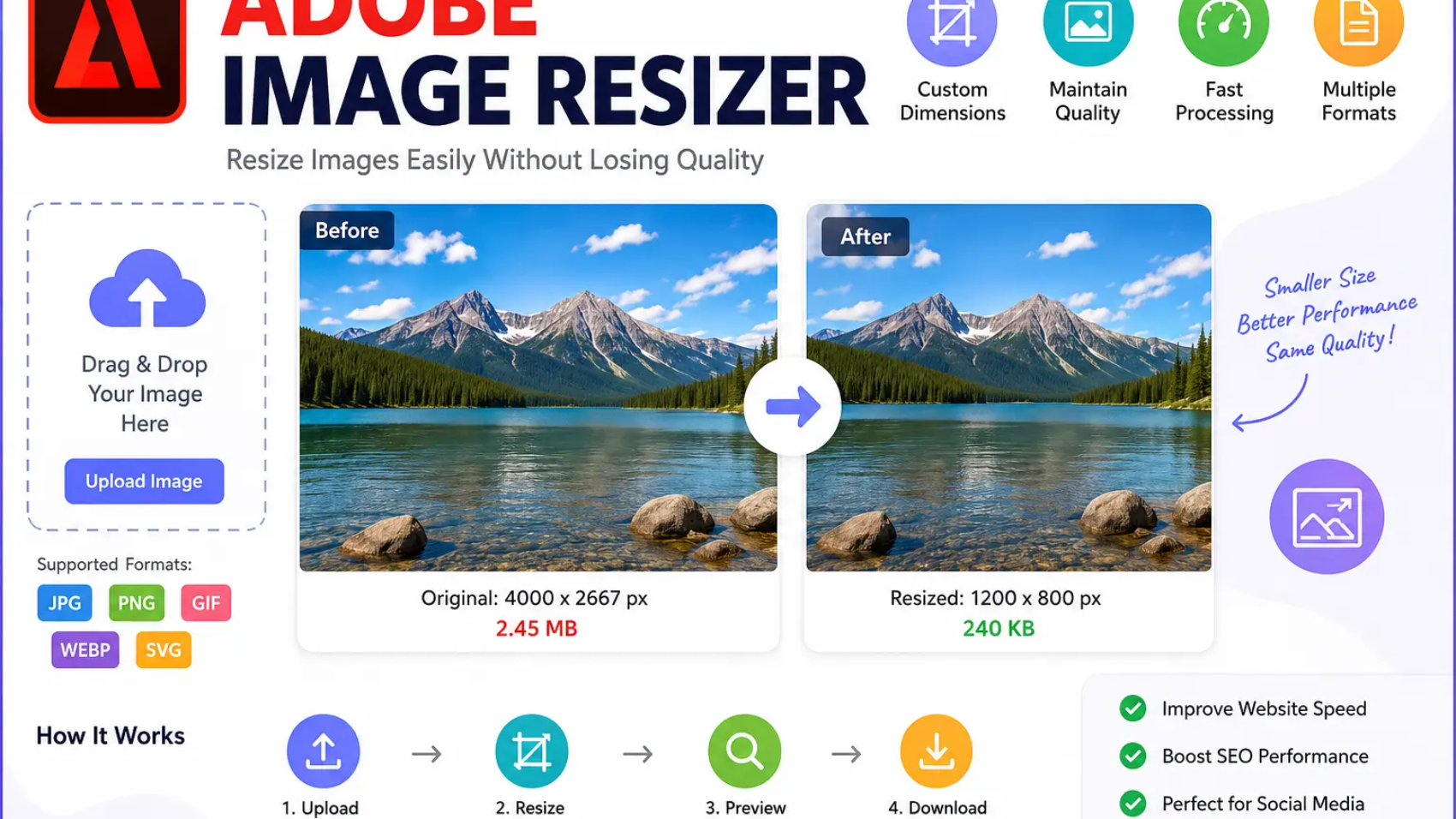
Images play a big role in digital content. People use images for websites, blogs, social media posts, online stores, and school projects. However, image size does not always match the platform where you want to use it. Because of this, you need a simple tool that can change image dimensions without stress.
Adobe Image Resizer is a tool that helps users adjust image size in a fast and easy way. It supports many image formats and works for different needs. You can resize photos for social media, websites, marketing materials, and personal projects. As a result, users save time and get better image quality.
Today, many people look for quick image editing solutions. Adobe offers trusted tools that help beginners and professionals. The Adobe Image Resizer stands among the best image resizing tools because it combines speed, quality, and ease of use. You know, a good image size can improve user experience and website performance.
What Is Adobe Image Resizer
Adobe Image Resizer is an online and software-based image editing solution. It allows users to change image dimensions while keeping image quality. This tool helps people prepare images for different platforms and screen sizes. Therefore, users can create content that looks clean and professional. The tool works with many image formats. Users can resize JPG, PNG, and other common image files.
Because of this flexibility, people can use the tool for business and personal tasks. Look, you do not need advanced design skills to resize an image. Many content creators use Adobe tools every day. Adobe focuses on user-friendly design and reliable performance. As a result, users can resize images with only a few clicks. This process saves effort and helps maintain visual quality.
Why Image Resizing Matters
Image resizing helps improve website speed. Large images often slow page loading time. When users resize images correctly, websites load faster and provide a better experience. Therefore, visitors stay longer and engage more with content. Social media platforms require specific image dimensions. Each platform uses different image size rules.
Resizing images before upload helps content appear clear and professional. Consequently, brands create a stronger online presence. Storage management is another benefit. Smaller images use less storage space. This helps users organize files and reduce device clutter. Trust me, proper image sizing makes daily work much easier.
Key Features of Adobe Image Resizer
Adobe Image Resizer includes many useful features. These tools help users complete image editing tasks with speed and accuracy. Therefore, both beginners and professionals find value in the platform. One important feature is custom image dimensions. Users can enter exact width and height values. This helps create images that match project requirements. As a result, design consistency becomes easier.
Another feature is quality preservation. The tool aims to keep image details sharp after resizing. This helps users avoid blurry results. Like many Adobe products, the focus remains on professional-quality output. Users also enjoy quick processing. The resizing process takes only a short time. Because of this, people can complete projects faster and increase productivity.
Benefits of Using Adobe Image Resizer
Adobe Image Resizer offers convenience. Users can resize images without learning complex editing methods. Therefore, beginners can start quickly and complete tasks with confidence. The tool also supports creative projects. Bloggers, marketers, photographers, and students benefit from image resizing. Because images fit platform requirements, content looks more polished and attractive.
Quality control is another major advantage. Many resizing tools reduce image clarity. Adobe works to maintain detail and visual appeal. Consequently, users achieve better results for websites and social media. Time savings matter as well. Manual image editing often takes longer. Adobe streamlines the process and reduces workload. This helps users focus on creating content rather than fixing image issues.
How Adobe Image Resizer Works
Adobe Image Resizer follows a simple workflow. Users upload an image, choose dimensions, and download the resized file. Because of this process, resizing becomes accessible for everyone. The tool calculates new image dimensions based on user settings. It then adjusts the image size while attempting to preserve visual quality.
Users receive a resized version suitable for their needs. Many Adobe tools include responsive design elements. This makes navigation easy and clear. As a result, users complete image resizing tasks without confusion.
Steps to Resize an Image
Step 1: Upload Your Image
Select the image file from your device. The upload process usually takes only a few seconds. Therefore, users can begin editing quickly.
Step 2: Choose New Dimensions
Enter the desired width and height. Some versions also provide preset dimensions. This helps users match social media and website requirements.
Step 3: Review the Preview
Check the image before download. This step helps ensure the new size meets expectations. Consequently, users avoid unnecessary edits later.
Step 4: Download the File
Save the resized image to your device. The file becomes ready for websites, social media, presentations, or marketing materials.
Adobe Image Resizer for Social Media
Social media platforms use different image sizes. Facebook, Instagram, LinkedIn, Pinterest, and X each have unique requirements. Therefore, image resizing becomes an important step in content creation.
Adobe Image Resizer helps users create platform-ready visuals. Users can adjust dimensions before publishing content. As a result, images display correctly and maintain quality. Good image sizing also supports engagement. Clear visuals attract attention and improve content performance. You know, strong visuals often help brands build trust online.
Common Social Media Image Sizes
| Platform | Recommended Use | Common Size |
| Instagram Post | Square Post | 1080 x 1080 |
| Facebook Post | Feed Image | 1200 x 630 |
| LinkedIn Post | Professional Content | 1200 x 627 |
| Pinterest Pin | Vertical Pin | 1000 x 1500 |
| X Post | Standard Post | 1200 x 675 |
Adobe Image Resizer for Websites
Website images affect speed and user experience. Large image files increase loading times. Therefore, proper resizing helps improve performance and SEO. Adobe Image Resizer allows users to create optimized images for websites. Smaller image sizes reduce bandwidth usage and improve page speed.
As a result, visitors enjoy smoother browsing experiences. Search engines also value fast websites. Optimized images support technical SEO efforts. Consequently, website owners may improve visibility in search results.
Website Image Optimization Benefits
| Benefit | Impact |
| Faster Loading | Better user experience |
| Reduced Storage | Lower server usage |
| Improved SEO | Better search visibility |
| Better Mobile Experience | Faster mobile browsing |
| Professional Appearance | Higher engagement |
Adobe Image Resizer for eCommerce
Online stores depend on high-quality images. Customers often judge products by pictures before they make a purchase. Therefore, image size and quality play a major role in sales performance. Adobe Image Resizer helps store owners prepare product photos for different platforms. Users can create images that fit product pages, category pages, and promotional banners. As a result, online stores maintain a professional appearance.
Fast-loading product images also improve customer experience. Large files may slow pages and increase bounce rates. Because of this, resizing images before upload remains a smart practice for eCommerce businesses. Clear product photos build trust. Customers want to see details before they buy. Consequently, proper image resizing helps balance quality and performance.
Supported Image Formats
Adobe Image Resizer supports several popular image formats. This flexibility allows users to work with images from different devices and sources. Therefore, the tool fits many workflows. JPG files remain popular for photography. They provide a good balance between image quality and file size. Because of this, many websites use JPG images.
PNG files work well for graphics and images with transparent backgrounds. Users often choose PNG for logos and design elements. As a result, brands maintain visual consistency across platforms. Some Adobe tools also support modern formats. These formats help reduce file sizes while maintaining visual quality. Consequently, users gain more options for optimization.
Common Image Formats
| Format | Best Use | Main Benefit |
| JPG | Photos | Small file size |
| PNG | Logos and graphics | Transparency support |
| GIF | Simple animations | Motion support |
| WebP | Websites | Better compression |
| SVG | Icons and graphics | Scales without quality loss |
Maintaining Image Quality During Resizing
Image quality remains one of the biggest concerns when resizing pictures. Users want smaller images without losing clarity. Therefore, choosing the right settings matters. Start with a high-quality original image. A strong source image produces better resizing results. As a result, details remain clearer after processing. Avoid extreme size reductions. Large changes may reduce sharpness and visual detail. Because of this, gradual adjustments often work better.
Use proper dimensions for the target platform. This prevents unnecessary stretching and distortion. Consequently, images maintain a natural appearance. Review the final image before publishing. A quick check helps identify issues before viewers see them. Trust me, a few extra seconds can improve overall quality.
Common Image Resizing Mistakes
Many users resize images without understanding best practices. This often leads to poor results. Therefore, learning common mistakes can help improve outcomes. One mistake involves stretching images. Users sometimes change width without adjusting height proportionally. As a result, images appear distorted and unprofessional. Another mistake involves uploading oversized files. Large images consume storage and slow websites. Because of this, optimization should happen before publication.
Some users ignore platform requirements. Different websites and social networks require different dimensions. Consequently, images may display incorrectly. Low-quality source images create problems as well. Resizing cannot restore missing detail. Therefore, starting with a clear image remains important.
Adobe Express and Image Resizing
Adobe Express includes image resizing features that help users create content quickly. The platform combines resizing with design tools. Therefore, users can complete several editing tasks in one place. The interface remains simple and beginner-friendly. Users upload an image, select dimensions, and apply changes. As a result, content creation becomes more efficient.
Adobe Express also offers templates for social media and marketing materials. This helps users create visuals that match platform standards. Consequently, content looks polished and professional. Many creators use Adobe Express for daily projects. The combination of resizing and design features saves time and improves workflow.
Using Adobe Image Resizer on Mobile Devices
Mobile editing continues to grow each year. Many users create and publish content directly from smartphones. Therefore, mobile-friendly image tools have become important. Adobe image resizing tools support mobile workflows. Users can adjust image dimensions from phones and tablets. As a result, content creation becomes more flexible.
Mobile resizing helps social media managers, bloggers, and business owners. They can prepare images while traveling or working remotely. Because of this, productivity increases. The mobile experience often includes simple controls and quick processing. Consequently, users complete tasks without needing desktop software.
Adobe Image Resizer for Bloggers
Bloggers depend on images to improve content engagement. Strong visuals support articles and attract reader attention. Therefore, image optimization plays a key role in blogging. Adobe Image Resizer helps bloggers prepare featured images and article graphics. Proper dimensions improve website appearance and consistency. As a result, blogs look more professional.
Optimized images also support faster page loading. Readers prefer websites that load quickly. Because of this, resizing images benefits user experience. Search engines consider page performance as well. Consequently, image optimization supports broader SEO efforts.
SEO Benefits of Proper Image Resizing
Search engine optimization involves many factors. Image optimization remains one important area. Therefore, resizing images contributes to website success. Smaller image files improve page speed. Faster websites often provide better user experiences. As a result, visitors stay longer and interact more with content.
Optimized images reduce bandwidth usage. This helps websites perform better on mobile devices. Consequently, mobile visitors enjoy smoother browsing. Proper image management also improves site organization. Search engines can process pages more efficiently. Because of this, image optimization supports technical SEO goals.
SEO Advantages of Image Optimization
| SEO Factor | Benefit |
| Faster Pages | Better user experience |
| Lower Bounce Rate | Increased engagement |
| Mobile Performance | Improved accessibility |
| Reduced Bandwidth | Better efficiency |
| Technical SEO Support | Stronger optimization |
Image Resizing for Email Marketing
Email campaigns often include promotional images. However, large files may slow loading times. Therefore, image optimization becomes essential. Adobe Image Resizer helps marketers create lightweight visuals. Smaller images load faster inside email clients. As a result, subscribers see content without delays.
Proper image sizing also improves email design. Images fit layouts more accurately and maintain consistency. Consequently, campaigns appear more professional. Fast-loading emails help improve engagement. Readers can focus on content instead of waiting for images to appear.
Image Resizing for Digital Marketing
Digital marketing uses images across many channels. Websites, ads, social media, and landing pages all require visual content. Therefore, image resizing remains a core marketing task. Adobe Image Resizer helps marketers create platform-specific assets. Different channels require different dimensions. As a result, campaigns perform better across platforms.
Consistent image quality strengthens brand identity. Customers recognize professional visuals more easily. Because of this, businesses build stronger credibility. Optimized images also support campaign performance. Faster loading visuals improve user experience and increase engagement opportunities.
Advanced Image Optimization Tips
Image optimization goes beyond simple resizing. Users can combine several techniques to improve results. Therefore, learning advanced methods provides additional value. Compress images after resizing. Compression reduces file size while maintaining visual quality. As a result, websites load faster.
Choose the correct file format for each project. Different formats serve different purposes. Because of this, understanding format strengths helps improve efficiency.
Organize images with clear file names. This supports content management and SEO efforts. Consequently, projects remain easier to manage. Regularly review image performance. Monitoring results helps identify opportunities for improvement. Look, small changes can create meaningful gains over time.
Choosing the Right Dimensions
Image dimensions depend on project goals. Different platforms use different standards. Therefore, selecting proper dimensions remains important. Start by reviewing platform guidelines. These recommendations help ensure correct display. As a result, images appear sharp and professional.
Avoid using dimensions that exceed actual needs. Larger images increase file size without adding value. Because of this, right-sizing images improves efficiency. Consistency also matters. Using standard dimensions across projects creates a cleaner visual identity. Consequently, content appears more organized.
Adobe Image Resizer for Professional Workflows
Professionals often manage large volumes of images. Efficient workflows help save time and maintain quality. Therefore, reliable resizing tools become valuable assets. Adobe Image Resizer supports content creators, designers, marketers, and photographers. Users can prepare images for multiple platforms with ease. As a result, productivity increases.
The tool also supports brand consistency. Teams can create images that match company standards. Consequently, visual communication becomes stronger. Reliable performance helps professionals meet deadlines. Because of this, Adobe remains a trusted choice for many creative workflows.
Adobe Image Resizer vs Other Image Resizers
Many image resizing tools exist today. However, each tool offers different features and levels of quality. Therefore, users should compare options before choosing a solution. Adobe Image Resizer focuses on ease of use and reliable results. Users can resize images quickly while maintaining visual quality. As a result, both beginners and professionals find value in the platform.
Some free tools provide basic resizing functions. These tools may work for simple tasks. However, they often lack advanced editing features and integration options. Consequently, users may need additional software. Adobe also connects with a broader creative ecosystem. This helps users move between projects and editing tools. Because of this, workflows become more efficient.
Comparison Table
| Feature | Adobe Image Resizer | Basic Free Resizers |
| Easy Interface | Yes | Usually |
| Quality Preservation | Strong | Varies |
| Professional Tools | Yes | Limited |
| Cloud Integration | Yes | Rare |
| Brand Reliability | High | Varies |
Best Practices for Using Adobe Image Resizer
Successful image resizing starts with planning. Users should understand the final purpose of each image before making changes. Therefore, selecting correct dimensions becomes easier. Always keep a copy of the original image. This allows future edits without quality loss. As a result, users maintain flexibility for different projects.
Use dimensions that match the target platform. Proper sizing prevents distortion and improves appearance. Consequently, content looks more professional. Review images before publishing. Small errors may affect quality and user experience. Because of this, a final inspection remains a valuable step.
Creating Images for Mobile Users
Mobile traffic continues to grow across websites and applications. Therefore, image optimization for smartphones has become essential. Adobe Image Resizer helps create images that load quickly on mobile devices. Smaller files improve browsing speed and reduce data usage. As a result, users enjoy a smoother experience.
Mobile-friendly images also improve website engagement. Visitors stay longer when pages load efficiently. Consequently, businesses benefit from better user satisfaction. Responsive image sizing supports different screen dimensions. Because of this, content remains clear on many devices.
Image Resizing for Content Creators
Content creators publish visuals every day. Blogs, videos, social posts, and marketing campaigns all depend on strong images. Therefore, efficient image resizing saves valuable time. Adobe Image Resizer helps creators prepare visuals for multiple platforms. Users can create consistent content without complicated editing steps. As a result, productivity improves.
Visual consistency strengthens personal and business brands. Audiences recognize familiar styles and layouts. Consequently, creators build stronger connections with followers. Fast workflows also allow creators to focus on new ideas. Because of this, creativity remains the main priority.
Image Resizing for Students and Teachers
Educational projects often include images. Students use visuals in reports, presentations, and assignments. Therefore, image resizing becomes a useful skill. Adobe Image Resizer helps students prepare images that fit project requirements. Proper sizing improves organization and presentation quality. As a result, projects appear more professional.
Teachers also benefit from optimized visuals. Smaller files make sharing and storage easier. Consequently, educational materials become more accessible. Simple tools support learning without creating extra challenges. Because of this, users of all skill levels can work efficiently.
Future Trends in Image Optimization
Technology continues to evolve. Image optimization methods improve as digital content grows. Therefore, users should stay aware of industry trends. Modern tools focus on balancing quality and performance. Smaller file sizes remain important for websites and applications. As a result, optimization techniques continue to advance.
Artificial intelligence also supports image processing. Many platforms use smart systems to improve efficiency. Consequently, image management becomes faster and more accurate. User expectations continue to rise. People want high-quality visuals and fast loading times. Because of this, image optimization will remain important in the future.
Common Use Cases for Adobe Image Resizer
Many industries rely on image resizing. Different projects require different dimensions and file sizes. Therefore, flexible tools remain valuable. Businesses resize images for websites, advertisements, and product catalogs. Bloggers prepare featured images and article graphics. As a result, content appears professional and organized.
Photographers often create smaller versions of large images for sharing purposes. Social media managers prepare visuals for multiple platforms. Consequently, image resizing supports many workflows. Students, teachers, marketers, and designers all benefit from optimized images. Because of this, image resizing has become a common digital task.
Expert Tips for Better Results
Start with the highest-quality image available. Strong source files produce better results after resizing. Therefore, image quality remains more consistent. Choose dimensions carefully. Images should match their intended platform. As a result, visuals display correctly and maintain clarity.
Avoid unnecessary edits after resizing. Multiple changes may reduce quality over time. Consequently, users should plan modifications before exporting files. Keep image organization simple. Clear file names and folders improve workflow management. Look, a clean system saves time during large projects.
Why Adobe Remains a Popular Choice
Adobe has built a strong reputation in digital creativity. Many users trust Adobe products for professional and personal projects. Therefore, Adobe tools continue to attract large audiences. Adobe Image Resizer offers simplicity and reliability. Users complete tasks without facing unnecessary complexity. As a result, productivity improves.
The Adobe ecosystem also provides additional creative tools. Users can expand projects beyond image resizing. Consequently, workflows become more connected. Reliable performance, quality preservation, and ease of use help Adobe remain a leading choice. Trust me, these benefits matter for long-term success.
Adobe Image Resizer Checklist
Before downloading a resized image, review these important points.
| Checklist Item | Status |
| Correct dimensions selected | ✓ |
| Image quality reviewed | ✓ |
| Proper file format chosen | ✓ |
| Platform requirements checked | ✓ |
| File size optimized | ✓ |
| Final preview completed | ✓ |
FAQ’s
Adobe Image Resizer is a tool that changes image dimensions while helping maintain visual quality. It supports many image formats and works for websites, social media, and digital projects.
Yes. Resizing images often reduces file size. Smaller files help improve website speed, storage efficiency, and online performance.
Yes. The tool uses a simple workflow. Users can upload an image, choose dimensions, and download the resized version with ease.
Common formats include JPG, PNG, GIF, WebP, and other widely used image types. Support may vary depending on the Adobe product being used.
Yes. Optimized images improve page speed and user experience. Faster websites often support stronger SEO performance.
Conclusion
Adobe Image Resizer is a practical solution for modern image management. It helps users adjust image dimensions for websites, social media, digital marketing, education, and business projects. As a result, images become more suitable for their intended purpose.
The tool supports quality preservation, workflow efficiency, and content optimization. Users can create professional visuals without complex editing skills. Therefore, both beginners and experienced creators benefit from its features and flexibility.
Among image resizing tools, Adobe Image Resizer remains one of the most trusted options available. It combines simplicity, performance, and reliability in a single solution. Consequently, users can create optimized images that support better user experiences, stronger SEO results, and successful digital content strategies.
Short SEO Title:
Adobe Image Resizer Guide: Resize Images Fast
Short Meta Description:
Resize images quickly with Adobe Image Resizer. Learn how to optimize photos for websites, social media, and better image quality.
Focus Keyphrase:
Adobe Image Resizer
SEO Slug:
adobe-image-resizer
Leave Your Comment