
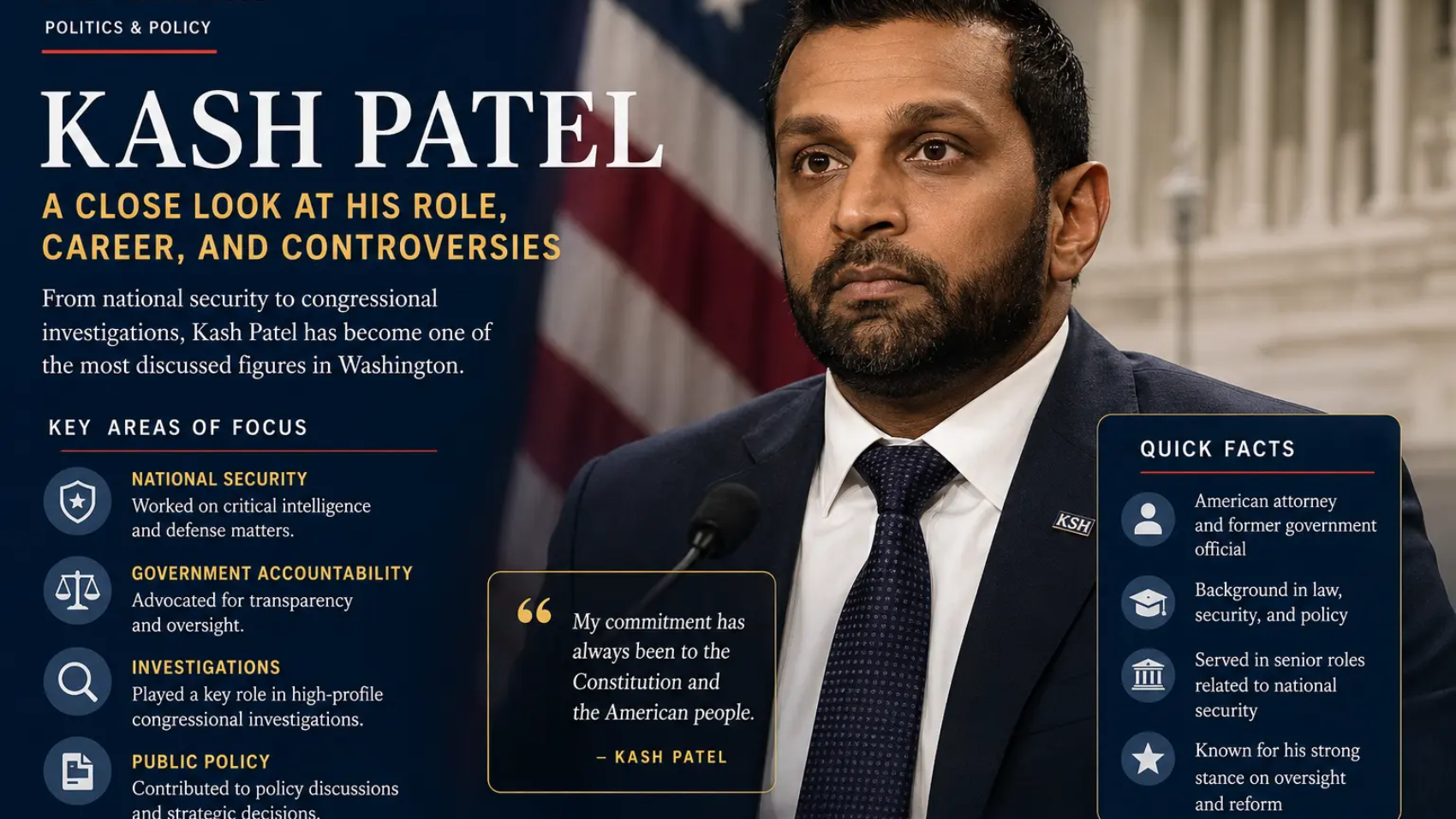
The phrase “Kash Patel Atlantic article” refers to articles, reports, and discussions about Kash Patel that appear in The Atlantic or relate to coverage published by The Atlantic. Kash Patel became a well-known political figure in the United States because of his work in national security, intelligence matters, and government service. As media coverage grew, many major publications examined his role, actions, and influence.
Today, readers search for information about Kash Patel and Atlantic articles to understand the facts behind public debates. News reports, opinion pieces, and political analysis often discuss his career, his relationship with key government leaders, and his impact on national security conversations. This topic remains important because it connects media coverage, politics, and public trust.
This guide explains the background, major themes, public discussion, and media attention surrounding Kash Patel. The article uses verified information and focuses on facts, context, and analysis. Readers can gain a clear understanding of why this subject attracts attention and how major publications cover it.
Who Is Kash Patel
Kash Patel is an American attorney, former government official, and national security professional. He gained public attention through work in intelligence, defense, and congressional investigations. His career includes positions in government agencies and advisory roles connected to national security matters. During his public service career, Patel worked on issues related to intelligence gathering, oversight, and policy development.
Many supporters view him as a strong advocate for government accountability. Critics often examine his involvement in political investigations and policy decisions. His name became more visible during major political events in Washington. As a result, newspapers, magazines, and television networks frequently discussed his actions and statements. This media attention helped make him a recognizable figure in national politics.
Early Life and Education
Kash Patel comes from a family with Indian heritage. His educational background includes legal studies and professional training that prepared him for government service. His academic path helped build skills in law, investigation, and policy analysis. Early in his career, Patel worked in legal and security-related positions.
These roles gave him experience with criminal justice matters and intelligence issues. Over time, he developed expertise that led to opportunities in federal government service. His education and professional development shaped the foundation of his later work. Many observers point to this period as an important stage in his career growth and public recognition.
Work in National Security
National security became one of the most important areas of Patel’s professional life. He served in positions that involved intelligence review, policy support, and security matters. These responsibilities placed him close to major government operations. Government officials often work with large amounts of information when making security decisions.
Patel participated in environments where analysis, oversight, and strategic planning played key roles. This experience increased his visibility within policy circles. His supporters argue that he contributed valuable expertise. Others focus on controversies connected to political events. Regardless of viewpoint, his work in national security remains a central part of his public profile.
Congressional Responsibilities
Patel also worked in congressional roles that involved investigations and oversight activities. Congress often examines government actions to ensure accountability and transparency. These responsibilities placed Patel in high-profile political discussions. Many reports connected his name with investigations involving intelligence agencies and government operations.
His involvement led to praise from some political groups and criticism from others. Such reactions increased public interest in his work. As media organizations covered these developments, his role became a frequent topic of discussion. This attention helped establish him as a significant figure in modern political reporting.
Growing Public Interest
Media outlets often focus on individuals who influence important political events. Kash Patel became one of those figures because his work connected to national security, intelligence, and government investigations. Public interest grew as political debates became more intense. Readers wanted detailed explanations about people involved in key decisions and investigations.
Journalists responded by producing profiles, reports, and analysis pieces. The combination of politics, security issues, and public debate created strong media attention. As a result, Patel appeared in coverage from newspapers, magazines, television programs, and digital publications.
Role of Political Journalism
Political journalism aims to explain events, policies, and public figures. Reporters gather information, review records, and interview sources to create detailed stories. Publications often analyze how government officials influence national events. Coverage of Patel reflects this broader journalistic mission. Writers examine his career, public statements, and government responsibilities.
These articles help readers understand the context behind political developments. Many readers use such reporting to learn about policy issues and leadership decisions. Therefore, political journalism remains an important source of information in democratic societies.
Background of The Atlantic
The Atlantic is a well-known American magazine that publishes reporting, commentary, and analysis. It covers politics, culture, technology, and public affairs. Over many years, the publication has built a reputation for long-form journalism. Writers at The Atlantic often explore complex topics through detailed reporting.
Their articles provide historical context and analysis that help readers understand current events. This style attracts audiences interested in deeper discussion. Because politics remains a major focus of public attention, The Atlantic frequently examines government officials and political developments. Coverage of figures such as Kash Patel fits within this broader editorial approach.
Editorial Style and Reporting
The Atlantic often combines investigative reporting with analysis. Articles may review public records, official statements, and expert opinions. This method helps create detailed narratives about important subjects. Many readers appreciate long-form reporting because it offers context that shorter news updates may not provide.
Detailed articles can explain background information, timelines, and competing viewpoints. When publications analyze public figures, they often examine both achievements and controversies. This approach allows readers to understand the full scope of a person’s public role.
Key Areas Associated With Kash Patel
| Area | Description |
| Law | Legal training and professional experience |
| National Security | Work involving intelligence and security matters |
| Government Service | Roles within federal institutions |
| Congressional Oversight | Participation in investigations and reviews |
| Public Policy | Involvement in policy discussions |
| Media Coverage | Frequent subject of political reporting |
Common Topics Found in Coverage
| Topic | Focus Area |
| Intelligence Issues | Security and information analysis |
| Government Accountability | Oversight and transparency |
| Political Investigations | Examination of major events |
| Leadership Decisions | Policy and management actions |
| Media Analysis | Interpretation of public events |
| Public Debate | Discussion among supporters and critics |
Key Reasons Readers Search for Kash Patel Atlantic Article
Interest in Political Analysis
Many readers want detailed explanations rather than brief headlines. Long-form articles help explain complicated events and political developments. This need drives searches related to Kash Patel and Atlantic coverage. Readers often compare information from different sources.
They seek context, timelines, and expert commentary to build a fuller understanding of events. Detailed reporting supports this goal. Political analysis remains valuable because it helps people understand how decisions affect government institutions and public policy.
Understanding Public Debate
Public debate often includes different interpretations of the same event. Media coverage helps present facts, viewpoints, and historical context. Readers can then evaluate information for themselves. Articles about public figures frequently attract attention because they connect individual actions with larger political issues.
This relationship explains why searches related to Kash Patel continue to appear across search engines. Understanding these discussions allows readers to follow national conversations with greater clarity and confidence.
Media Attention and Public Discussion
How Public Figures Become Major News Topics
Public figures often receive media attention when they participate in important events. Kash Patel became a subject of discussion because his work connected to national security, government investigations, and public policy. These topics affect many areas of government, so journalists frequently cover them.
News organizations track people who influence political decisions. Reporters review documents, statements, and public records to explain events to readers. As a result, Patel appeared in many articles, interviews, and political discussions.
Public interest also increased because political debates became more visible online. Readers searched for reliable information and detailed analysis. This trend helped drive attention toward articles discussing his career and activities.
Influence of Modern N ews Cycles
The modern news cycle moves quickly. Information spreads across websites, social media platforms, television programs, and podcasts. Political stories often remain in public discussion for long periods because new details continue to emerge. When a political figure gains attention, multiple media organizations examine the same topic from different angles.
Some focus on policy issues, while others explore historical context and public reaction. This variety creates a large collection of content for readers. Because of this environment, articles connected to Kash Patel often become part of broader conversations about government oversight, leadership, and national security.
Government Accountability
Government accountability remains a common theme in political journalism. Reporters often examine whether agencies and officials follow laws, procedures, and ethical standards. This topic appears frequently in discussions involving investigations and oversight activities. Many articles discuss accountability because citizens expect transparency from public institutions.
Journalists help explain how decisions occur and what impact those decisions may have on government operations. Coverage involving Kash Patel often intersects with these discussions. Writers analyze actions, responsibilities, and policy outcomes to provide context for readers.
Intelligence and Security Matters
Intelligence work plays a major role in national security. Government agencies collect and analyze information to support decision-making and protect national interests. This field often receives media attention because of its importance. Articles covering intelligence matters usually explain procedures, oversight mechanisms, and policy debates.
Readers seek this information to understand how government agencies operate. Because Patel worked in areas connected to intelligence and security, these topics appear regularly in discussions about his professional career.
Political Strategy
Political strategy involves planning, communication, and decision-making within government and political organizations. Journalists often examine how leaders and advisors influence policy discussions. Coverage of strategy focuses on actions, objectives, and outcomes.
Readers use this information to better understand political developments and public debates. Many reports about Patel explore his role in strategic discussions and political processes. This theme contributes to ongoing interest in his career.
Detailed Reporting
Long-form journalism gives writers space to explore complex topics. Instead of presenting only headlines, these articles provide history, context, and analysis. Readers gain a deeper understanding of events through this format. Many political subjects require detailed explanations because they involve multiple agencies, policies, and public figures.
Long-form reporting helps connect these pieces into a clear narrative. Articles about Kash Patel often appear within this style of journalism because his career intersects with several major government issues.
Historical Context
Historical context helps readers understand why events matter. Journalists often connect current developments to earlier decisions, investigations, and policy changes. This approach allows readers to see patterns and relationships that may not appear in short news reports.
Context creates a more complete picture of political events. When writers discuss Patel, they frequently reference past government actions and investigations. These references help explain his role within larger political developments.
Public Reactions to Media Coverage
Supporters often describe Kash Patel as a figure who promoted oversight and accountability. They point to his involvement in investigations and policy discussions as evidence of his commitment to public service. Many supporters believe his work helped increase transparency in government processes.
They view his actions as an effort to improve public understanding of important issues. These perspectives appear in interviews, opinion pieces, and public commentary. They form one side of the broader discussion surrounding his career.
Critical Viewpoints
Critics focus on controversies and political disagreements connected to Patel’s work. They examine decisions, public statements, and investigations that generated debate. Political journalism often includes these viewpoints because balanced reporting requires attention to different perspectives.
Readers can then evaluate evidence and form independent conclusions. The existence of both supportive and critical opinions explains why discussions about Patel continue to attract public interest.
Importance of Diverse Perspectives
A healthy public discussion includes multiple viewpoints. Journalists, analysts, and readers often disagree about political events and public figures. These differences encourage deeper examination of facts and evidence. Media organizations present various perspectives to help readers understand complex issues.
This process contributes to informed public debate. Coverage related to Kash Patel demonstrates how different groups can interpret the same events in different ways while discussing the same facts.
Understanding Media Analysis
News reporting focuses on verified facts, events, and developments. Opinion articles provide interpretation and commentary from individual writers. Both formats appear in major publications. Readers benefit when they understand the difference between reporting and opinion content.
News stories explain what happened, while opinion pieces discuss what events may mean. Many publications include both forms of content. Therefore, readers examining articles about Patel should recognize the purpose of each format.
Importance of Source Evaluation
Reliable information depends on trustworthy sources. Journalists use official documents, interviews, public records, and expert analysis to support reporting. Readers should evaluate information carefully and compare multiple sources when researching political topics.
This practice improves understanding and reduces confusion. Strong source evaluation remains an essential skill for anyone studying public affairs and government issues.
Impact on Political Conversations
Media coverage increases public awareness of political figures and government activities. Detailed reporting introduces readers to topics they may not encounter otherwise. As articles discuss policy decisions and investigations, readers learn about government operations and public institutions.
This knowledge supports informed civic participation. Coverage involving Kash Patel contributed to broader discussions about intelligence oversight, accountability, and national security.
Effect on Public Debate
Political reporting often shapes public debate by highlighting important issues. Articles encourage readers to consider evidence, viewpoints, and policy outcomes. Debate becomes more meaningful when participants understand the facts surrounding an issue.
Journalism helps provide that foundation. The discussion surrounding Patel illustrates how media coverage can influence public understanding and political conversation.
Timeline of Career Development
Patel’s early career included legal and investigative work. These experiences helped develop skills related to law, analysis, and public service. Professional growth during this period prepared him for future opportunities in government.
His work established a foundation for later responsibilities. Many biographies highlight this stage because it explains how he entered national-level public service.
Entry Into Government Roles
Government service brought increased responsibility and visibility. Patel worked in positions connected to policy, intelligence, and oversight activities. These roles expanded his influence and introduced him to complex national issues.
As his responsibilities grew, public attention also increased. Media organizations began following his work more closely during this period.
National Recognition
National recognition emerged as political events attracted widespread attention. Journalists and analysts discussed Patel’s role in several high-profile developments. Public awareness increased through news coverage, interviews, and public commentary.
This visibility transformed him into a widely recognized political figure. His growing profile helped drive continued interest in articles and analysis related to his career.
Lessons From Political Media Coverage
Context helps readers understand why a story matters. Without background information, political events may seem confusing or incomplete. Journalists often provide timelines, historical references, and policy explanations to create context. These elements improve understanding and clarity. Readers who examine context carefully gain a stronger understanding of political developments.
Value of Critical Reading
Critical reading helps people evaluate information responsibly. Readers should compare sources, examine evidence, and consider multiple perspectives. This approach reduces the risk of misunderstanding complex issues.
It also promotes informed discussion and thoughtful analysis. Political topics often involve competing viewpoints. Therefore, critical reading remains an important skill for every reader.
Focus on Verified Information
Verified information forms the foundation of quality journalism. Accurate reporting depends on evidence, documentation, and responsible fact-checking. Readers benefit when they prioritize factual information over rumors and speculation. Reliable sources improve understanding and support informed decision-making. This principle applies to all political topics, including discussions related to Kash Patel and media coverage.
Media Influence and Public Perception
Media coverage plays a major role in how people understand political figures. News reports, analysis pieces, and editorials introduce readers to important facts and events. Many people learn about government activities through trusted publications and news organizations. When journalists cover public figures, they often explain actions, decisions, and outcomes.
This process helps readers understand complex political topics. Detailed reporting creates a stronger connection between public events and public knowledge. Coverage connected to Kash Patel demonstrates how journalism can influence public awareness. Readers often use media reports to build opinions and gain context about political developments.
Building Public Perception
Public perception develops through many sources of information. News articles, interviews, public speeches, and official statements all contribute to how people view a public figure. Different readers may reach different conclusions after reviewing the same information.
Personal beliefs, experiences, and political views can influence interpretation. This reality makes balanced reporting important. Coverage about Kash Patel often reflects this dynamic. Supporters and critics may focus on different aspects of the same event, creating a wide range of public opinions.
Search Interest and Online Visibility
Many people search for information related to Kash Patel and Atlantic articles because they want context and analysis. Political stories often involve complex events that require deeper explanation than standard news updates provide. Readers frequently look for background information, timelines, and expert commentary.
Long-form journalism helps satisfy this need by presenting detailed discussions and supporting evidence. Search interest also grows when political developments receive widespread attention. Increased visibility often leads readers to explore related articles and reports.
Growth of Digital News Consumption
Digital platforms have changed how people access information. Readers can now find articles, interviews, and analysis within seconds. This convenience increases engagement with political content.
Online news archives also make it easier to research historical events. Readers can compare coverage from different periods and evaluate how stories evolved over time. Because of digital access, topics connected to Kash Patel remain available to new audiences long after initial publication.
The Importance of Responsible Journalism
Responsible journalism depends on accuracy. Reporters verify information through documents, interviews, and credible sources before publishing stories. Accurate reporting helps maintain public trust.
Readers rely on journalists to provide factual information about events that affect society and government institutions. When discussing political figures, accuracy becomes even more important because public understanding often depends on reliable reporting.
Transparency in Reporting
Transparency helps readers understand how information was gathered. Journalists often explain sources, evidence, and reporting methods when presenting important stories. This openness improves credibility and allows readers to evaluate information independently.
Transparent reporting strengthens confidence in the news process. Political coverage benefits from transparency because it promotes accountability and informed discussion.
Balanced Presentation of Facts
Balanced reporting seeks to present facts fairly while acknowledging different viewpoints. Journalists may include comments from multiple sources to create a complete picture of an issue. Readers gain a better understanding when articles include context and competing perspectives.
This approach supports thoughtful analysis instead of simple conclusions. Coverage involving Kash Patel often includes a range of perspectives because political topics rarely involve only one viewpoint.
Key Takeaways From Kash Patel Atlantic Article Discussions
Understanding the Broader Context
Articles connected to Kash Patel often discuss larger themes beyond one individual. Topics such as government oversight, intelligence operations, accountability, and political strategy frequently appear in coverage.
Understanding these broader themes helps readers see how individual events connect to larger public issues. Context creates a more complete understanding of political developments. Readers who examine both the facts and the background information gain stronger insight into public affairs.
Importance of Informed Reading
Informed reading requires attention to sources, evidence, and context. Political topics often contain many details that deserve careful examination. Readers benefit from comparing information across multiple reputable publications.
This habit promotes critical thinking and deeper understanding. Careful reading remains one of the most effective ways to navigate modern political reporting.
Lasting Relevance of Political Analysis
Political analysis remains valuable because government decisions affect many aspects of society. Detailed reporting helps explain these decisions and their potential consequences. As new events emerge, readers continue to seek reliable information and thoughtful analysis.
Publications that provide context and evidence help meet this need. The continuing interest in Kash Patel-related coverage reflects the public’s desire to understand important political developments.
Future Interest in the Topic
Continued Public Attention
Political figures who participate in major events often remain subjects of public discussion for many years. Their actions become part of broader historical and political narratives. Readers continue to revisit articles and reports when new developments occur.
Historical coverage provides context that helps explain current events. This pattern suggests that interest in Kash Patel-related discussions may continue as political conversations evolve.
Role of Historical Records
Historical records preserve information that future readers can study and evaluate. News archives, public documents, and official reports contribute to a deeper understanding of past events. Researchers, journalists, and citizens often use these records to examine political developments.
Access to documented information supports transparency and accountability. The availability of historical reporting helps maintain long-term interest in important public figures and events.
FAQ’s
The term usually refers to articles, analysis, or discussions about Kash Patel that appear in The Atlantic or relate to coverage from the publication.
Kash Patel gained attention through his work in law, national security, intelligence matters, and government service.
Readers often seek background information, political analysis, timelines, and context regarding his career and public role.
Common topics include government accountability, intelligence oversight, political investigations, national security, and public policy.
Long-form journalism provides context, historical background, and detailed analysis that help readers understand complex events.
Conclusion
Kash Patel remains a significant figure in modern political discussions because of his involvement in government service, intelligence matters, and public policy. Media organizations continue to examine his career due to the influence of these topics on national conversations. Readers often seek detailed information to understand both the facts and the broader context surrounding his work.
Coverage associated with Kash Patel and Atlantic articles highlights the importance of responsible journalism. Accurate reporting, transparent sourcing, and careful analysis help readers navigate complex political issues. Strong journalism creates opportunities for informed discussion and encourages a deeper understanding of public affairs.
As interest in government accountability, national security, and political leadership continues, readers will likely remain interested in reporting related to Kash Patel. Careful examination of verified information, historical context, and multiple viewpoints allows individuals to build a balanced understanding of this widely discussed topic.
Leave Your Comment